

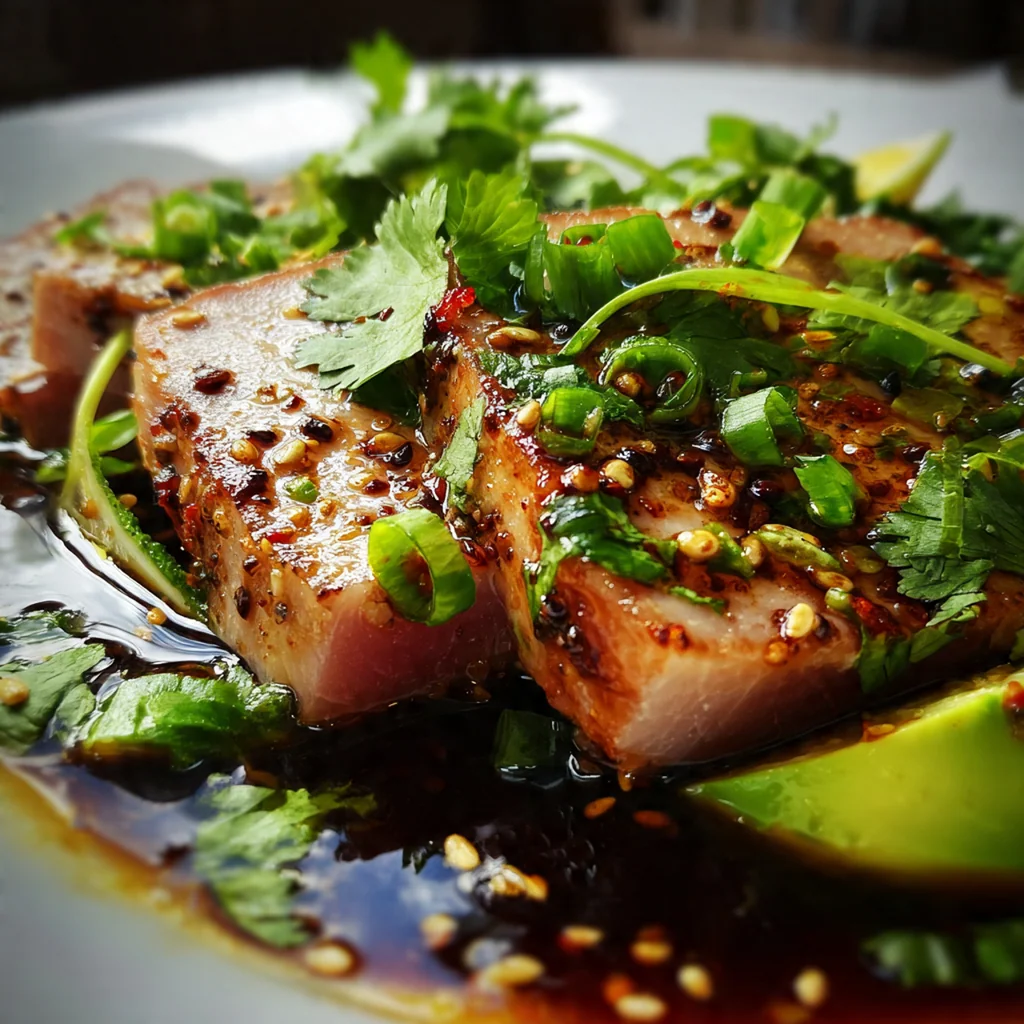
This sesame-crusted tuna steak recipe brings restaurant luxury to your kitchen any night of the week. It’s an Asian fusion dish that turns simple, high-quality fish into something spectacular with a nutty crust and a glossy, savory-sweet sauce. I love how it feels fancy yet the whole thing comes together in less than half an hour. If you’re looking for a way to master cooking tuna steak at home, this method is the one that never fails me.
Why You'll Love This Recipe
- You get that perfect seared crust with a cool, rare center
- The ginger-soy glaze is sticky, sweet, salty and impossible to resist
- It cooks in under ten minutes once your pan is hot
- This is my go-to for impressing guests without any stress
Ingredients You’ll Need
- Sushi-grade ahi tuna steaks: The star of the show and non-negotiable for serving rare. Look for deep red color, firm texture and a trusted fishmonger.
- Avocado oil: A high smoke point oil is crucial for that blistering hot sear without burning or smoking up your kitchen.
- Black and white sesame seeds: They create the signature crust. Using both adds visual appeal and a deeper, toastier sesame flavor.
- Kosher salt: Its clean flavor and coarse texture adhere well to the fish and season it perfectly from the outside in.
- Freshly ground black pepper: Adds a subtle warmth that complements the sesame and ginger without overwhelming them.
- Low-sodium soy sauce or tamari: Forms the base of your glaze. Low-sodium lets you control the salt level and tamari keeps it gluten-free.
- Honey: Provides the gloss and sweet balance to the salty soy. It helps the glaze thicken beautifully in the pan.
- Rice vinegar: A touch of bright acidity cuts through the richness and rounds out the sauce’s flavor profile.
- Fresh ginger: Grated finely, it infuses the glaze with its sharp, aromatic punch. Don’t use the dried powder here.
- Garlic: Minced fresh garlic adds a savory, pungent backbone that makes the sauce taste complete.
- Toasted sesame oil: Just a teaspoon adds an incredible depth of nutty aroma. It’s the finishing touch for the sauce.
- Green onions: Their fresh, sharp bite as a garnish adds color and a bright counterpoint to the rich fish.
- Lime wedges: An optional but fantastic squeeze of citrus right at the end that really makes the flavors pop.
How to Make It
Dry and Oil the Fish:
Start by patting your tuna steaks completely dry with paper towels. Any surface moisture will steam the fish instead of searing it. Then, drizzle them lightly with the high-heat oil and rub it all over to create a thin, even coat.
Coat With Sesame Seeds:
Mix your black and white sesame seeds with the salt and pepper on a large plate. Press each tuna steak firmly into the mixture on both sides, using the palm of your hand. You want a nice, even crust that will toast up in the pan.
Whisk the Glaze Together:
In a small bowl, combine the soy sauce, honey, rice vinegar, grated ginger, minced garlic and toasted sesame oil. Give it a good whisk until the honey is fully dissolved. Setting this aside now means your sauce is ready to go when the fish is done.
Get Your Pan Screaming Hot:
Place your heavy skillet over medium-high heat and let it preheat for a solid two to three minutes. It’s ready when a drop of water sizzles and vanishes on contact. A properly hot pan is your secret to the perfect crust.
Sear the Tuna Steaks:
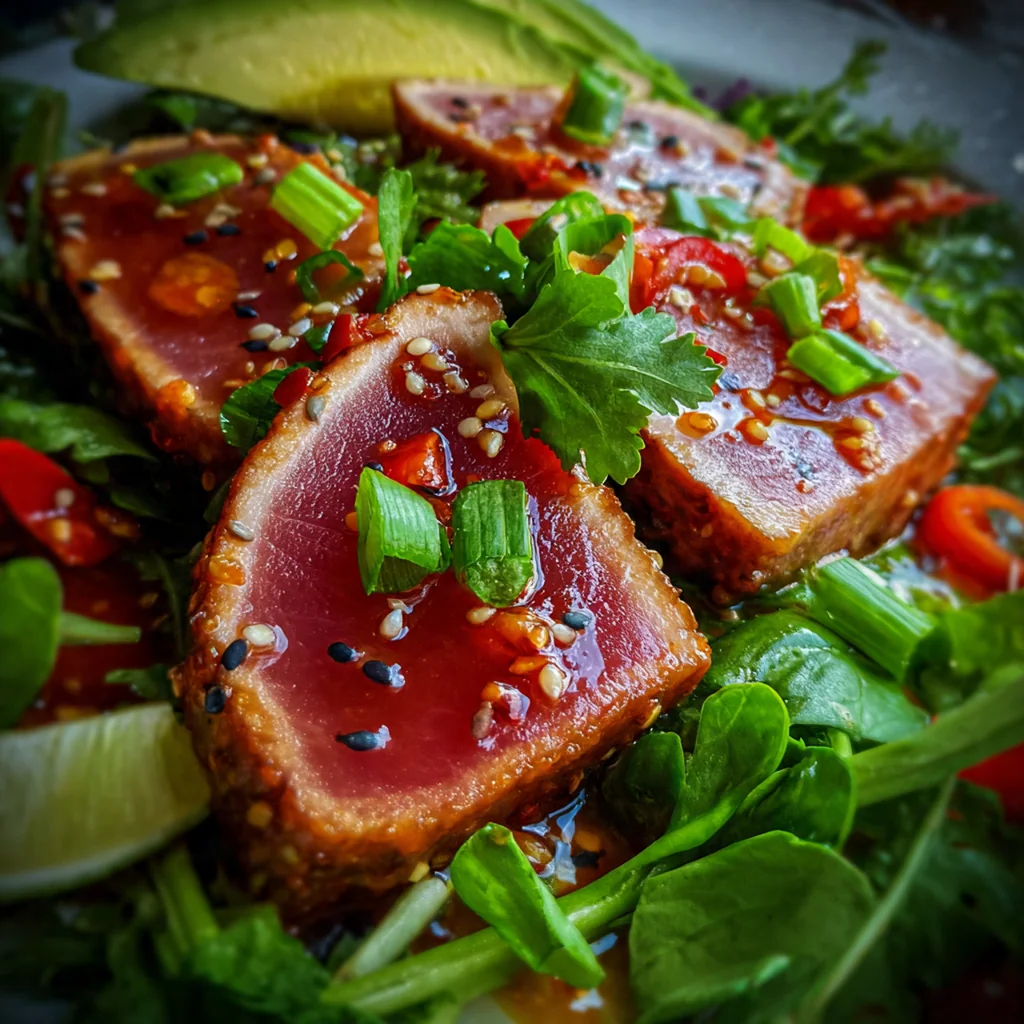
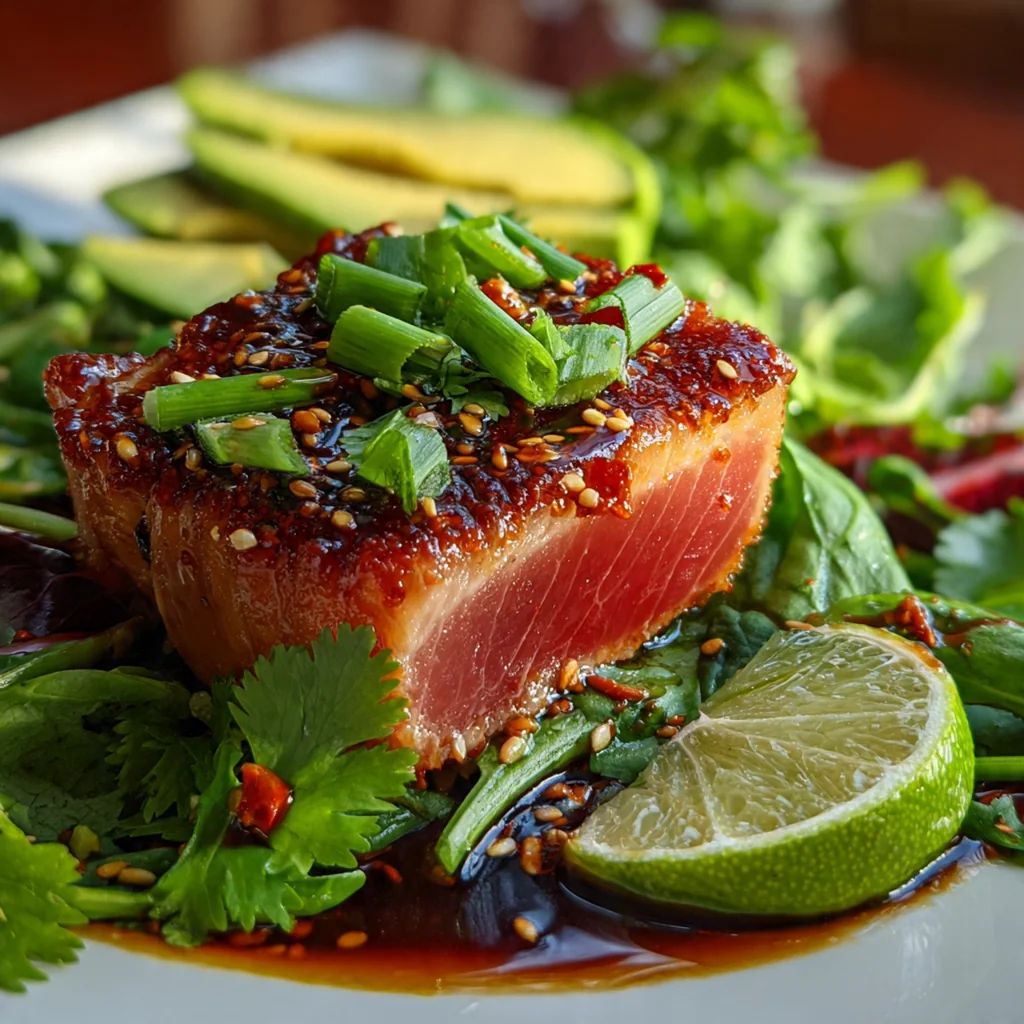
Carefully lay the crusted steaks in the hot, dry skillet. Don’t touch them or move them around. Let them sear undisturbed for about 90 seconds to two minutes per side for a beautiful rare center. You’ll see the sesame crust turn a deep golden brown.
Rest the Fish and Make the Glaze:
Transfer the seared tuna to a cutting board to rest. Immediately pour your pre-mixed sauce into the still-hot pan. It will sizzle and bubble up. Let it simmer for just a minute or two, stirring constantly, until it thickens slightly into a shiny glaze.
Slice and Serve Immediately:
Use a sharp knife to slice the rested tuna steak against the grain into half-inch thick pieces. Arrange them on a platter, drizzle the warm glaze all over, and scatter the sliced green onions on top. This dish is best enjoyed right away while the contrast between the hot crust and cool center is perfect.
You Must Know
- Your pan must be very hot before the fish touches it
- Quality sushi-grade tuna is the only safe choice for rare cooking
- Never move the steaks once they’re in the pan
- Slice firmly against the grain for tender pieces
- I always have everything prepped and ready before I turn the stove on
Storage Tips
This tuna steak is truly at its peak the moment you slice into it, so I recommend enjoying it immediately. If you have leftovers, store the cooked fish in an airtight container in the fridge for up to a day. Keep in mind it’ll continue to cook a bit from residual heat and will be more done when chilled. You can eat it cold, flaked over a salad, or reheat it very gently in a skillet for just a minute, but don’t expect that same rare magic.
Ingredient Substitutions
If you can’t find a mix of sesame seeds, just use all white ones. For the soy sauce, coconut aminos work in a pinch for a slightly sweeter, soy-free version. If you don’t have fresh ginger, a tablespoon of ginger paste from a tube is a decent swap, though fresh is superior. Maple syrup or agave can stand in for the honey if needed. For a different citrus note, try serving with orange wedges instead of lime.
Serving Suggestions
I love this tuna steak sliced over a big bowl of steaming jasmine rice or chilled soba noodles so they catch all that extra ginger-soy glaze. A simple side of steamed bok choy, snap peas, or broccoli works wonderfully. For something refreshing, a quick cucumber salad with a little rice vinegar and salt balances the dish’s richness perfectly. Don’t forget to spoon any extra glaze from the platter over everything on the plate.
Cultural Context
This dish is a beautiful example of modern Asian fusion cooking, taking inspiration from Japanese techniques like searing high-quality tuna and pairing it with a glaze that nods to classic teriyaki. The use of both black and white sesame seeds is common for visual drama in Japanese cuisine, while the ginger-soy combination is a cornerstone flavor profile across many East Asian kitchens. It’s a recipe that respects the integrity of a fantastic piece of fish while building layers of texture and flavor around it, which is a principle you’ll find everywhere from Tokyo sushi bars to upscale bistros.
Pro Tips
- Let the fish come to room temp for 10 minutes before cooking
- A microplane is the best tool for grating ginger into a paste
- Invest in a good fish spatula for easy flipping
- The sauce will continue to thicken as it cools off the heat
- This is one recipe where I never skip the garnish
Frequently Asked Questions
You’ll want sushi-grade ahi tuna steaks, about 1 inch thick. This high-quality tuna is safe to eat rare or medium-rare and has the ideal firm texture for searing. It’s essential for achieving the restaurant-style result this dish promises.
You can coat the steaks in the sesame seed mixture and keep them covered in the fridge for a few hours before cooking. For the best texture and crust, it’s recommended to sear them just before serving. The ginger-soy glaze can be made ahead and reheated.
Low-sodium soy sauce works perfectly as a direct substitute for tamari. If you only have regular soy sauce, you can use it but may want to reduce any additional salt, as the glaze will reduce and concentrate. Coconut aminos are also a great gluten-free alternative.
For a perfect rare center, sear the sesame-crusted tuna steak for just 60-90 seconds per side over high heat. You’re looking for a deep brown, toasted crust on the sesame seeds while the inside remains cool and red. A visual cue is when the cooked portion creeps up about 1/4 inch from the edge.
Given its Asian Fusion profile, pair it with simple sides like steamed jasmine rice, a crisp cucumber salad, or sautéed bok choy. The rich, savory-sweet glaze also complements roasted broccoli or a simple seaweed salad beautifully.