

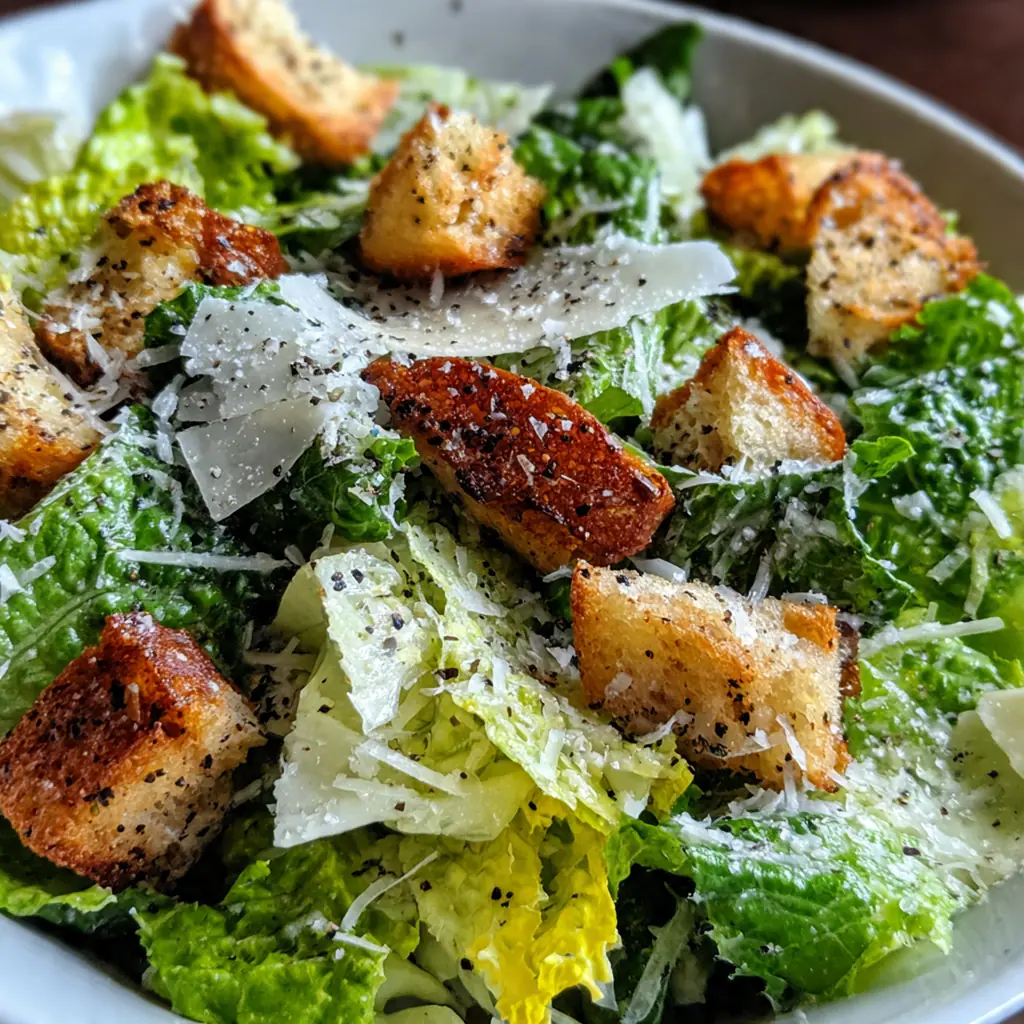
The ultimate Classic Caesar Salad is a restaurant-quality dish you can make at home with just a few key techniques. This Italian-American staple, created by Caesar Cardini in the 1920s, relies on a perfectly emulsified, umami-rich dressing and crisp, homemade croutons. It’s far more than just lettuce and dressing – it’s a textural masterpiece of savory, tangy, and crunchy elements that come together in minutes. I’ve been making this exact version for years, and it never fails to impress at a dinner party or satisfy as a quick, hearty lunch.
Why You'll Love This Recipe
- Crisp romaine provides the perfect, sturdy base for a hearty salad
- Homemade garlic croutons add a crunch that store-bought versions just can’t match
- The creamy, savory dressing is packed with umami from anchovies and Parmesan
- It feels like a special restaurant dish but is surprisingly straightforward to make
- This is my go-to when I want something impressive but low-fuss
Ingredients You’ll Need
- Day-old French bread: Stale bread soaks up the oil and garlic without getting mushy, resulting in croutons that stay supremely crisp in your salad.
- Olive oil: Coats the bread cubes for even browning and carries the flavor of the garlic beautifully.
- Garlic cloves: Freshly minced garlic infuses the oil for the croutons and forms the aromatic base of the dressing.
- Kosher salt: Its coarse texture adheres well to the bread and seasons every component with a clean, pure saltiness.
- Black pepper: Adds a gentle heat and earthy fragrance to the croutons, balancing the other savory elements.
- Anchovy fillets: These are the secret umami powerhouse, melting into the dressing for a deep, savory flavor that isn’t fishy.
- Large egg yolks: They act as the emulsifier, creating that lusciously thick and creamy texture for the dressing.
- Fresh lemon juice: Provides the essential bright, tangy acidity that cuts through the richness and makes the flavors pop.
- Dijon mustard: Another emulsifying helper that adds a subtle sharpness and complexity to the dressing’s flavor profile.
- Worcestershire sauce: Contributes a hit of savory depth and a touch of sweetness that rounds everything out perfectly.
- Extra-virgin olive oil: Drizzled slowly to emulsify, it gives the dressing its luxurious, silky body and fruity notes.
- Finely grated Parmesan cheese: Stirred in at the end, it melts into the dressing, adding a nutty, salty creaminess.
- Romaine lettuce hearts: Their crisp, sturdy leaves hold up to the heavy dressing without wilting immediately, offering a refreshing crunch.
- Additional grated Parmesan: A final shower of cheese on top adds a salty, savory finish and a beautiful presentation.
- Freshly ground black pepper: A few grinds on the finished salad adds a warm, aromatic note and a professional touch.
How to Make It
Preheat and Prep for Croutons:
Start by heating your oven to 375°F. This ensures it’s perfectly hot so your bread cubes start crisping up right away. Take your day-old bread and cut it into those one-inch cubes – they’re the ideal size for maximum crunch in every bite.
Toss and Bake the Croutons:
In a bowl, toss the bread cubes with olive oil, minced garlic, salt, and pepper until every piece is evenly coated. Spread them in a single layer on a baking sheet – crowding them steams them instead of toasting. Bake for 10 to 15 minutes, giving them a stir halfway, until they’re golden brown and irresistible.
Blend the Dressing Base:
While the croutons bake, make your dressing. In a food processor or blender, combine the anchovies, minced garlic, egg yolks, fresh lemon juice, Dijon mustard, and Worcestershire sauce. Blend this until it’s completely smooth, which takes about 30 seconds, creating a uniform paste.
Emulsify the Dressing:
With the processor running on its lowest setting, start drizzling in the extra-virgin olive oil in a very slow, steady stream. This slow addition is the key to a thick, creamy dressing that won’t separate. You’ll see it transform right before your eyes.
Finish the Dressing:
Transfer your gorgeous, thick dressing to a bowl. Stir in the finely grated Parmesan cheese until it’s fully incorporated. Now taste it – this is your chance to adjust with a tiny pinch more salt or pepper if you think it needs it.
Prepare the Lettuce:
Wash your romaine hearts thoroughly and then dry them completely. Any leftover water will dilute your beautiful dressing. Tear the leaves into bite-sized pieces by hand – it creates more texture than cutting with a knife.
Toss and Assemble the Salad:
Place your dry lettuce in a large bowl. Pour about half of the dressing over the top and toss gently with your hands or salad servers to coat evenly. You can always add more dressing, but you can’t take it away.
Add Croutons and Final Touches:
Once the lettuce is dressed to your liking, add the cooled croutons and give everything one last gentle toss to combine. Divide the salad among your plates immediately to keep everything crisp.
Garnish and Serve:
Finish each portion with an extra generous sprinkle of grated Parmesan and a few grinds of fresh black pepper. This final flourish makes it look stunning and adds that last hit of flavor right before you dig in.
You Must Know
- Day-old bread is non-negotiable for croutons that stay crunchy
- Emulsifying the oil slowly is the secret to a creamy, thick dressing
- Serve the salad immediately after tossing to keep the lettuce crisp
- The anchovies dissolve into pure umami – you won’t taste ‘fish’
- I never make a single batch of croutons – I always double it
Storage Tips
For the best results, store each component of this Caesar salad separately. Keep the dressing in a tightly sealed jar or container in the fridge, where it’ll stay fresh and creamy for up to three days. Your homemade croutons can live in an airtight container at room temperature for about five days, staying wonderfully crisp. The romaine should be washed, completely dried, and stored in a produce bag in the crisper drawer. Only assemble what you plan to eat right away, because once dressed, the salad wilts quickly and the croutons soften.
Ingredient Substitutions
If you’re out of day-old bread, fresh bread cubes toasted at a lower temperature (around 300°F) for a bit longer can work in a pinch. For a gluten-free version, just swap the French bread for your favorite gluten-free loaf to make the croutons. If you’re wary of raw eggs, pasteurized egg yolks are a safe and perfect substitute, or you can use three tablespoons of good-quality mayonnaise for a similar creamy texture. A dairy-free Parmesan alternative can stand in for the cheese, though the flavor will be slightly different. While it changes the classic profile, a mashed teaspoon of capers can provide a briny, savory punch if you absolutely must avoid anchovies.
Serving Suggestions
This Caesar salad is fantastic as a main course when you top it with grilled chicken breast, blackened shrimp, or even some seared salmon for a heartier meal. As a side, it pairs wonderfully with a simple pasta dish, a juicy grilled steak, or some garlic-butter seafood. For a true classic bistro experience, serve it alongside a crusty baguette and a glass of chilled Pinot Grigio or a light lager – the crisp wine or beer cuts right through the dressing’s richness. I also love serving it as the first course for a dinner party; it always feels elegantly simple and gets everyone excited for the next plate.
Cultural Context
While named for its Italian creator, Caesar Cardini, this iconic salad was actually invented in Tijuana, Mexico, in the 1920s. The story goes that Cardini, facing a busy Fourth of July rush, improvised with what he had left in his kitchen, tossing the salad tableside with dramatic flair. It quickly traveled north, becoming a fixture on steakhouse and Italian-American restaurant menus where its rich, bold flavors fit right in. The original didn’t even contain anchovies – the umami came from Worcestershire sauce – but they’ve become a standard in modern interpretations, including this one, for their incredible depth. It’s a dish born from necessity that turned into a global classic, celebrated for its perfect balance of texture and taste.
Pro Tips
- Dry your romaine completely – any water will make the dressing slide off
- Use a microplane for the Parmesan so it melts seamlessly into the dressing
- Let the croutons cool completely before adding them to the salad
- For a smoother dressing, ensure the anchovies are very finely minced before blending
- I always make extra dressing – it’s too good not to have on hand
Frequently Asked Questions
You can prep the components ahead! Make the dressing and store it covered in the fridge for up to 2 days. Prepare the croutons and keep them in an airtight container at room temperature. Wash, dry, and tear the romaine, then store it in a sealed bag with a paper towel. Assemble everything just before serving to keep the lettuce crisp and croutons crunchy.
For a similar savory, umami depth, you can use 1-2 teaspoons of Worcestershire sauce (though it contains anchovies) or 1 tablespoon of white miso paste. If you simply want to omit them, increase the Dijon mustard and Parmesan cheese slightly to boost the flavor profile of your Caesar salad.
Your croutons are perfectly ready when they are golden brown and crisp on the outside but still slightly chewy in the center. Bake them at 375°F (190°C) for about 15 minutes, tossing halfway through. Watch closely near the end, as they can go from golden to burnt quickly.
As an Italian-American classic, this Caesar salad pairs beautifully with grilled chicken, shrimp, or steak for a complete meal. It’s also fantastic alongside pasta dishes like fettuccine alfredo or as a starter before a main course of lasagna or baked ziti.
The traditional Caesar salad dressing uses raw egg yolks for emulsification and richness. To minimize risk, use the freshest, highest-quality eggs you can find. As an alternative, you can use pasteurized egg yolks from a carton or gently cook the yolks in a double boiler with the lemon juice until slightly thickened before blending with the other ingredients.