

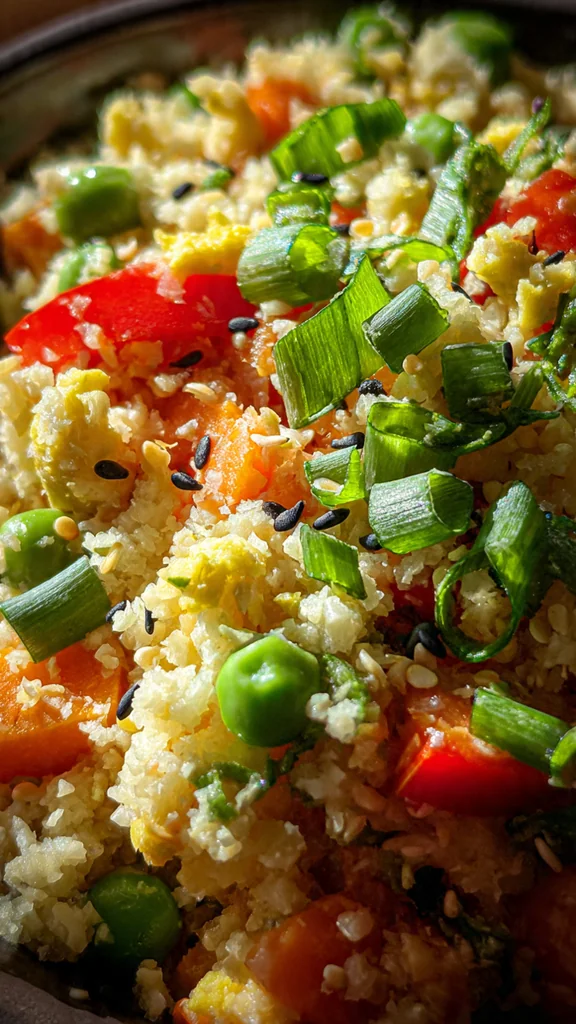
This savory cauliflower fried rice is the ultimate weeknight meal that proves healthy can be incredibly satisfying. This Chinese-American dish transforms simple riced cauliflower into a low-carb powerhouse that soaks up every drop of savory, gingery sauce. I love how it gets on the table faster than waiting for takeout, and it’s a genius way to pack more veggies into your routine. The beauty is in the versatility, letting you make it your own with whatever protein you have in the fridge.
Why You'll Love This Recipe
- Ready in 35 minutes for a stress-free dinner after a long day
- Packed with flavor and protein for a meal that truly fills you up
- Naturally low-carb and easy to make gluten-free with a simple swap
- Endlessly customizable with whatever protein or veggies you have on hand
- My family requests this one every single week
Ingredients You’ll Need
- Sesame oil: its deep, nutty flavor is the soul of this dish, with one part used to cook the eggs and another drizzled in at the end for maximum aroma.
- Eggs: they add crucial protein and a wonderful soft texture, beaten and scrambled first so they stay fluffy when mixed back in.
- Avocado oil or vegetable oil: a neutral oil with a high smoke point for stir-frying the aromatics without burning.
- Yellow onion: finely diced to melt into the base, providing a sweet, savory foundation for all the other flavors.
- Garlic: minced fresh for that unmistakable punch of flavor that builds the savory backbone of the dish.
- Fresh ginger: grated right into the wok for a bright, spicy kick that cuts through the richness.
- Frozen mixed peas and carrots: a convenient shortcut that adds color and sweetness, no chopping required.
- Riced cauliflower: the star of the show, it mimics the texture of rice while keeping things light and low-carb.
- Tamari or low-sodium soy sauce: this is your main seasoning, adding that deep umami and salty savoriness we all crave.
- Green onions: sliced thin and stirred in at the end for a burst of fresh, oniony crunch.
- Rice vinegar: just a splash cuts through the oil and adds a subtle tang that brightens the whole plate.
- White pepper: an optional but classic touch that adds a different, more floral heat compared to black pepper.
- Cooked shrimp, chicken, or tofu: an easy way to bulk up the meal with your favorite protein, already cooked for speed.
- Toasted sesame seeds: the perfect garnish for a final nutty crunch and a professional-looking finish.
- Chili oil or sriracha: for those who love heat, a drizzle on top lets everyone customize their own bowl.
- Extra sliced green onions: because you can never have too much of that fresh, green finish.
How to Make It
Scramble the Eggs:
Start by heating one tablespoon of sesame oil in your largest wok or skillet over medium-high heat. Pour in your lightly beaten eggs and let them set for a moment before scrambling them into soft curds. You want them fully cooked but still tender, which takes just a couple of minutes. Transfer them to a plate for now so they don’t overcook in the wok.
Sauté the Aromatics:
Give the wok a quick wipe if there’s any egg residue, then add the avocado oil. Once the oil is shimmering, toss in your diced onion and stir it often. Cook until the pieces turn soft and translucent, which builds a sweet base for the entire stir-fry.
Bloom the Garlic and Ginger:
Push the onions to the side and add the minced garlic and grated ginger to the center of the hot wok. Stir-fry them for about thirty seconds until they become incredibly fragrant. Be careful not to burn them, as that will make the dish taste bitter.
Cook the Frozen Veggies:
Add the frozen peas and carrots straight from the bag to the wok. Stir everything together and cook for a few minutes until the vegetables are no longer icy and are heated through. This step also helps to evaporate any excess moisture from the frozen veggies.
Stir-Fry the Riced Cauliflower:
Now, add your riced cauliflower to the wok, breaking up any big clumps with your spatula. Stir-fry it for five to seven minutes until it’s tender but still has a pleasant bite to it. This is where the magic happens, as the cauliflower soaks up all those savory flavors.
Add Your Protein:
If you’re using a pre-cooked protein like shrimp or chicken, push the cauliflower mixture to the edges of the wok. Add your protein to the center and let it heat through for a couple of minutes, which also helps to re-crisp it slightly.
Combine and Season:
Return the scrambled eggs to the wok. Drizzle in the remaining tablespoon of sesame oil, the tamari, and the rice vinegar, and add the white pepper if you’re using it. This is where all the components come together with their final seasoning.
Final Toss and Serve:
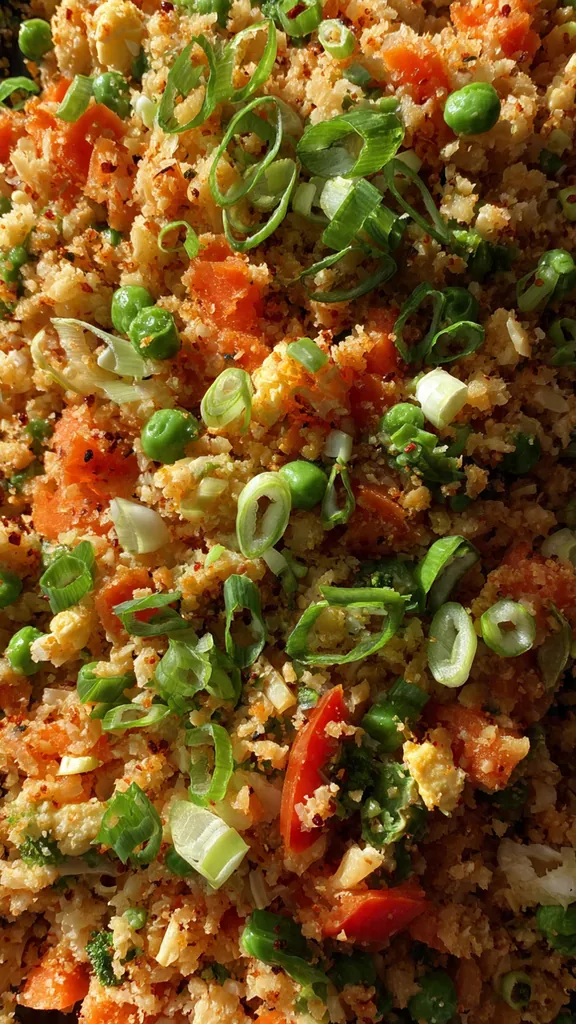
Give everything a really good toss until it’s evenly combined and piping hot, which should take about two more minutes. Take the wok off the heat and immediately stir in the sliced green onions for that fresh pop of color and flavor. Taste it and add an extra splash of tamari if you think it needs it, then serve right away with your favorite garnishes.
You Must Know
- Dry your riced cauliflower well for the best texture, not soggy
- Have everything chopped and ready before you turn on the stove
- A wide, hot wok is key for quick stir-frying, not steaming
- That last drizzle of sesame oil at the end is non-negotiable for aroma
- I always double the recipe for guaranteed lunches
Storage Tips
Store any leftovers in an airtight container in the fridge for up to three days, and they reheat surprisingly well. The trick is to use a skillet over medium heat, stirring occasionally, until everything is hot again. This method helps revive the texture and prevents it from getting mushy, which the microwave will definitely do. I don’t recommend freezing this dish, as the riced cauliflower tends to release too much water and become a bit watery when thawed.
Ingredient Substitutions
If you don’t have tamari, regular soy sauce works perfectly, but note it’s not gluten-free. Coconut aminos are a great soy-free alternative that adds a touch of sweetness. For the oil, any neutral high-heat oil like grapeseed or canola will do the job. Don’t have fresh ginger? A half teaspoon of ground ginger stirred in with the garlic can work in a pinch, though the flavor will be more muted. The frozen veggie mix is totally flexible, try corn or edamame instead.
Serving Suggestions
I love to serve this with a side of quick-pickled cucumbers or a simple shredded cabbage slaw dressed with a little rice vinegar and sesame oil. For a more substantial spread, add a few veggie spring rolls or steamed dumplings from the freezer aisle. If you’re keeping it super simple, just a big drizzle of chili oil and extra green onions on top makes it a complete and satisfying meal all on its own.
Cultural Context
This dish is a fantastic example of Chinese-American cuisine, taking the core concept of fried rice and adapting it with a modern, health-conscious twist. Traditional fried rice is a genius way to use up leftover rice and bits of protein, and this version honors that spirit of practicality by using riced cauliflower. The flavor profile, built on sesame oil, ginger, garlic, and soy sauce, is deeply rooted in those classic stir-fry traditions. It’s a beautiful fusion that makes a beloved comfort food accessible for different dietary needs without sacrificing an ounce of flavor.
Pro Tips
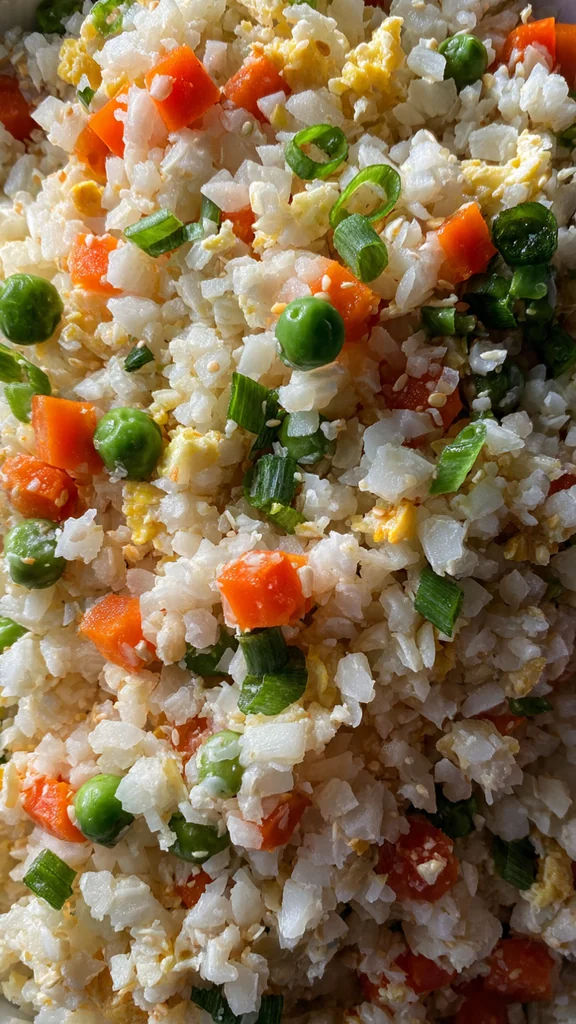
- Pat dry fresh riced cauliflower with a towel to remove excess moisture
- Prep all your ingredients before heating the wok for smooth sailing
- Use a wide, hot pan to cook quickly and avoid steaming the cauliflower
- Add a teaspoon of coconut aminos with the tamari if you like a hint of sweetness
- My vegan version skips the eggs and uses extra-firm tofu instead
Frequently Asked Questions
Low-sodium soy sauce is a perfect 1:1 substitute for the tamari in this cauliflower fried rice. For a gluten-free option, use coconut aminos, though it will be slightly sweeter. If you only have regular soy sauce, use it but be mindful of the saltiness and you might want to reduce the amount slightly.
Absolutely! It stores and reheats very well. Let the cooked cauliflower fried rice cool completely, then store it in an airtight container in the fridge for 3-4 days. Reheat it in a skillet over medium heat to help restore the best texture, or use the microwave for a quick fix.
Sesame oil provides essential flavor, but if you need a substitute, use avocado oil and add a teaspoon of toasted sesame seeds at the end. For the finishing drizzle, a little chili oil or even a neutral oil can work, though you’ll lose some of the classic nutty aroma.
Your cauliflower fried rice is ready when the riced cauliflower is tender but not mushy, and the liquid from the sauces has been absorbed or evaporated. This usually takes 5-8 minutes of stirring over medium heat. The peas and carrots should be heated through, and the green onions will be bright and vibrant.
This savory cauliflower fried rice is a complete meal on its own, especially if you’ve added a protein like shrimp, chicken, or tofu. For a larger Chinese-American style spread, it pairs wonderfully with a simple cucumber salad, steamed dumplings, or egg drop soup.