

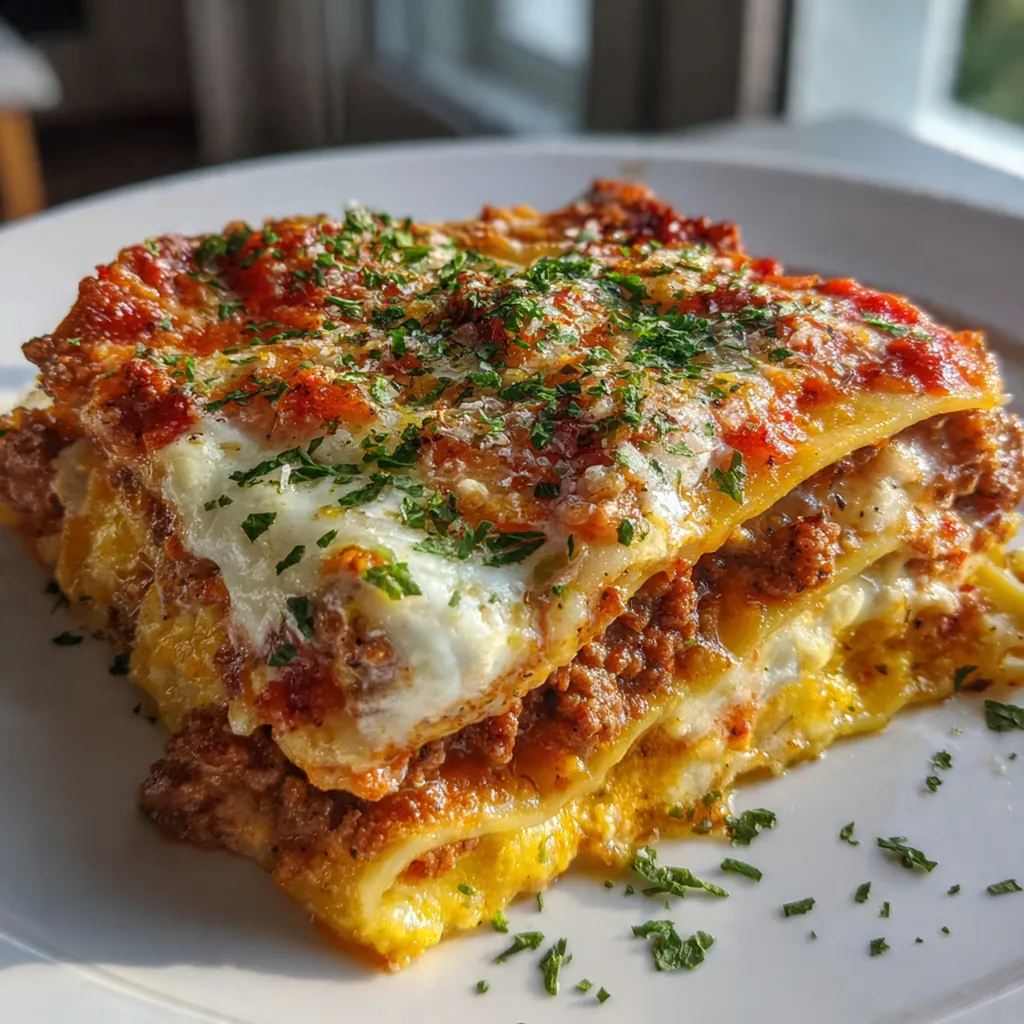
This classic lasagne alla Bolognese is the only recipe you’ll ever need for an authentic Italian masterpiece. It’s built on a foundation of a rich, slow-simmered meat ragù and a luxuriously creamy béchamel sauce, just as it’s made in Italy. Forget the shortcuts; the time and love you invest in this dish pays off in every single glorious bite. This is more than just a meal; it’s a true Sunday dinner tradition that brings everyone to the table, and a project that makes you feel like a true Italian chef in your own kitchen.
Why You'll Love This Recipe
- The flavor is incredibly rich and truly authentic
- It is the ultimate comfort food for any special occasion
- Creamy béchamel sauce creates a luxurious texture
- It’s a rewarding project that’s worth every minute
Ingredients You’ll Need
- Olive oil: A quality extra virgin olive oil starts your sauce with a fruity, peppery base. It’s used to gently sweat the vegetables without burning them.
- Yellow onion: This forms the aromatic foundation of your ragù. Finely chopping it ensures it melts into the sauce, adding a subtle sweetness.
- Carrots: Provides a natural, earthy sweetness that balances the acidity of the tomatoes. Finely chopping is key for a smooth sauce texture.
- Celery stalks: Adds a savory, slightly vegetal note to the sofrito. This completes the holy trinity of Italian aromatics for the perfect base.
- Ground beef: Choose an 85/15 blend. The fat content adds incredible flavor and moisture to the long-simmering sauce, keeping the meat tender.
- Ground pork: Don’t skip this! Pork adds a wonderful richness and a softer texture that beef alone can’t provide. It’s essential for authentic Bolognese.
- Dry red wine: Use a wine you’d enjoy drinking, like Chianti. It deglazes the pan, adding a deep, complex flavor note to the final sauce.
- Crushed San Marzano tomatoes: These are less acidic and sweeter than other canned tomatoes. They are the gold standard for creating a rich, velvety tomato sauce.
- Whole milk: Used in both the ragù and béchamel. It tenderizes the meat and is the base for your creamy, luscious white sauce.
- Unsalted butter: This gives you full control over the saltiness of your béchamel. It forms the base of the roux for a rich flavor.
- All-purpose flour: The thickening agent for your béchamel. Whisking it into the melted butter creates a roux that ensures a lump-free, silky sauce.
- Freshly grated nutmeg: A pinch of this warm spice is the secret ingredient in a classic béchamel. It adds a subtle warmth that complements the dairy perfectly.
- No-boil lasagne noodles: These noodles hydrate from the moisture in the sauces as the lasagne bakes, saving you time and effort without sacrificing texture.
- Parmigiano-Reggiano cheese: Grate your own from a block. It melts beautifully and adds a salty, nutty flavor that pre-shredded cheese can’t match.
- Salt: Essential for seasoning every layer. It enhances all the other flavors in the ragù and béchamel, bringing the dish to life.
- Freshly ground black pepper: Adds a touch of mild spice and complexity. Grinding it fresh provides a much more potent and aromatic flavor.
- Fresh basil or parsley: An optional garnish that adds a pop of fresh, herbaceous flavor and color right before serving, cutting through the richness.
How to Make It
Build the Flavor Foundation:
Start by making the ‘sofrito’, which is the heart of your ragù. Heat the olive oil in a large Dutch oven over medium heat. Add your finely chopped onion, carrots, and celery. You’ll cook them slowly, stirring every few minutes, for about 10-12 minutes. The goal is to soften them until they are fragrant and almost meltingly tender, not to brown them. This gentle cooking coaxes out their natural sweetness and builds the first layer of deep flavor for your lasagne.
Brown the Meats Thoroughly:
Now, turn the heat up to medium-high and add both the ground beef and ground pork to the pot. Use a sturdy spoon to break the meat apart into small crumbles. Let it cook without moving it too much at first, so it gets a really nice brown crust. This process should take about 8-10 minutes. Browning is crucial for developing a rich, savory character. Once the meat is fully cooked, carefully drain off any excess fat that has rendered out.
Deglaze and Tenderize:
Pour the red wine into the hot pot. As it sizzles, use your spoon to scrape up all those delicious browned bits stuck to the bottom. Let the wine simmer until it has almost completely evaporated, which concentrates its flavor. Next, stir in one cup of the whole milk. It might look a little strange at first, but this is a classic Italian technique that makes the meat incredibly tender and adds a subtle richness. Simmer gently until the milk is fully absorbed by the meat.
Simmer the Ragù Low and Slow:
It’s time for the final components of your sauce. Add the crushed San Marzano tomatoes, a teaspoon of salt, and a few generous grinds of black pepper. Stir everything together until well combined. Bring the sauce to a very gentle simmer, then immediately reduce the heat to the lowest possible setting on your stove. Partially cover the pot with a lid, leaving a small gap for steam to escape. Now, the magic happens. Let the ragù simmer for a minimum of 90 minutes, but for the best lasagne, let it go for a full two hours. Stir it occasionally to prevent sticking. This long, slow cook is non-negotiable; it melds the flavors into something truly spectacular.
Create the Creamy Béchamel:
About 30 minutes before your ragù is finished, you can make the béchamel. Melt the unsalted butter in a medium saucepan over medium heat. Whisk in the all-purpose flour and cook for one minute, stirring constantly. This little step cooks out the raw flour taste and creates your ‘roux’. Now, start adding the remaining four cups of whole milk very gradually, whisking constantly to prevent any lumps from forming. Once all the milk is incorporated, bring the sauce to a simmer and continue whisking until it thickens enough to coat the back of a spoon. This usually takes 8-10 minutes. Remove it from the heat and stir in the freshly grated nutmeg, salt, and pepper. Your béchamel is ready for the lasagne.
Prepare for Assembly:
Preheat your oven to 375°F (190°C). Grab your 9×13 inch baking dish and give it a light coating of cooking spray or butter. This will prevent the bottom layer of your lasagne from sticking and make serving much easier later on. Have all your components nearby: the finished ragù, the béchamel, your no-boil noodles, and the freshly grated Parmigiano-Reggiano cheese.
Layer Your Lasagne with Care:
Begin by spreading a thin, even layer of the meat ragù across the bottom of the baking dish. This prevents the first layer of pasta from sticking or becoming dry. Arrange a single layer of the no-boil lasagne noodles on top. Next, spread about a quarter of the remaining ragù over the noodles, followed by a generous layer of the creamy béchamel sauce. Finally, sprinkle a handful of the Parmigiano-Reggiano cheese over the top. Repeat these layers—noodles, ragù, béchamel, cheese—until you have three or four full layers of pasta, depending on the depth of your dish.
Finish the Top and Bake:
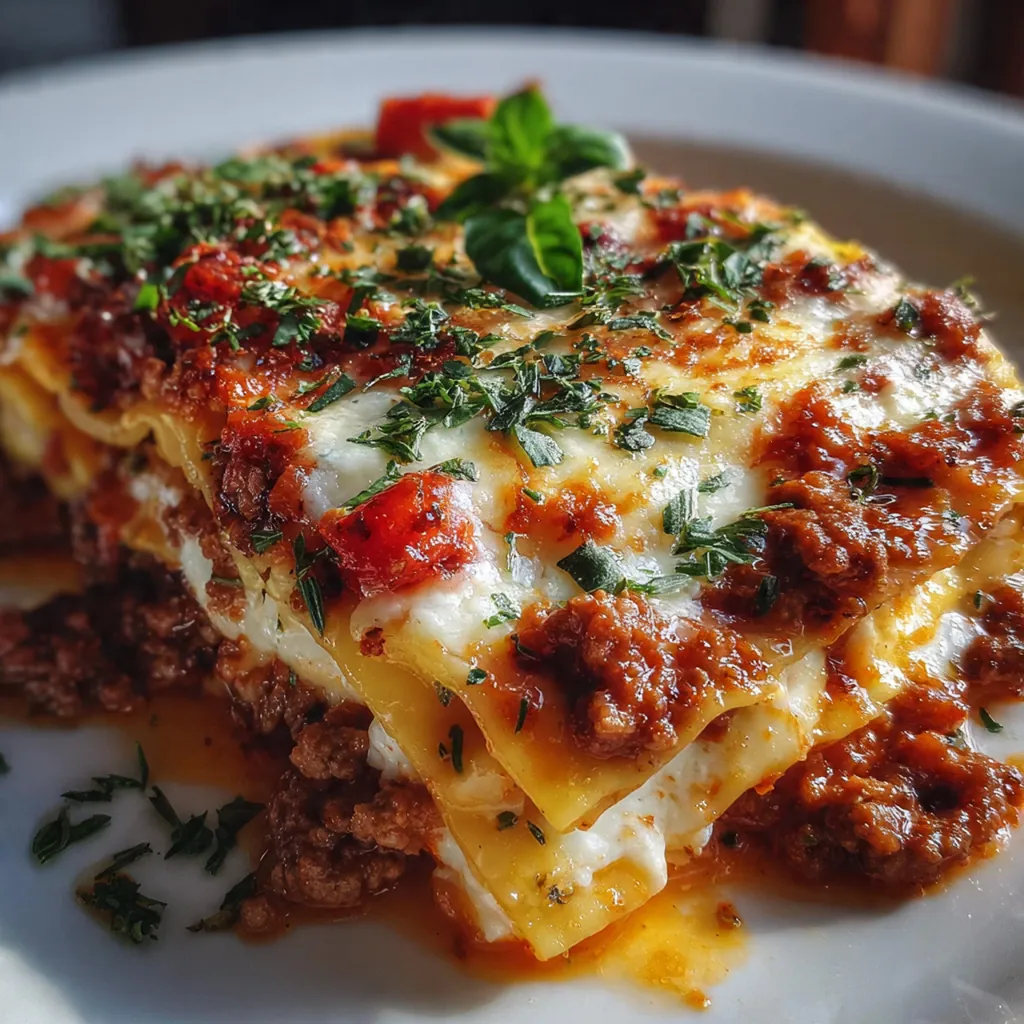
For the final layer, place your last sheet of noodles down. Spread all of the remaining béchamel sauce over the top, making sure to go all the way to the edges to protect the pasta from drying out. Spoon any remaining ragù in dollops over the béchamel, and finish with a very generous blanket of the remaining Parmigiano-Reggiano cheese. This will create that beautiful golden-brown crust. Cover the dish tightly with aluminum foil and bake for 30 minutes. Then, remove the foil and bake for another 15-20 minutes until the top of the lasagne is bubbly and beautifully golden brown.
Rest Before Serving:
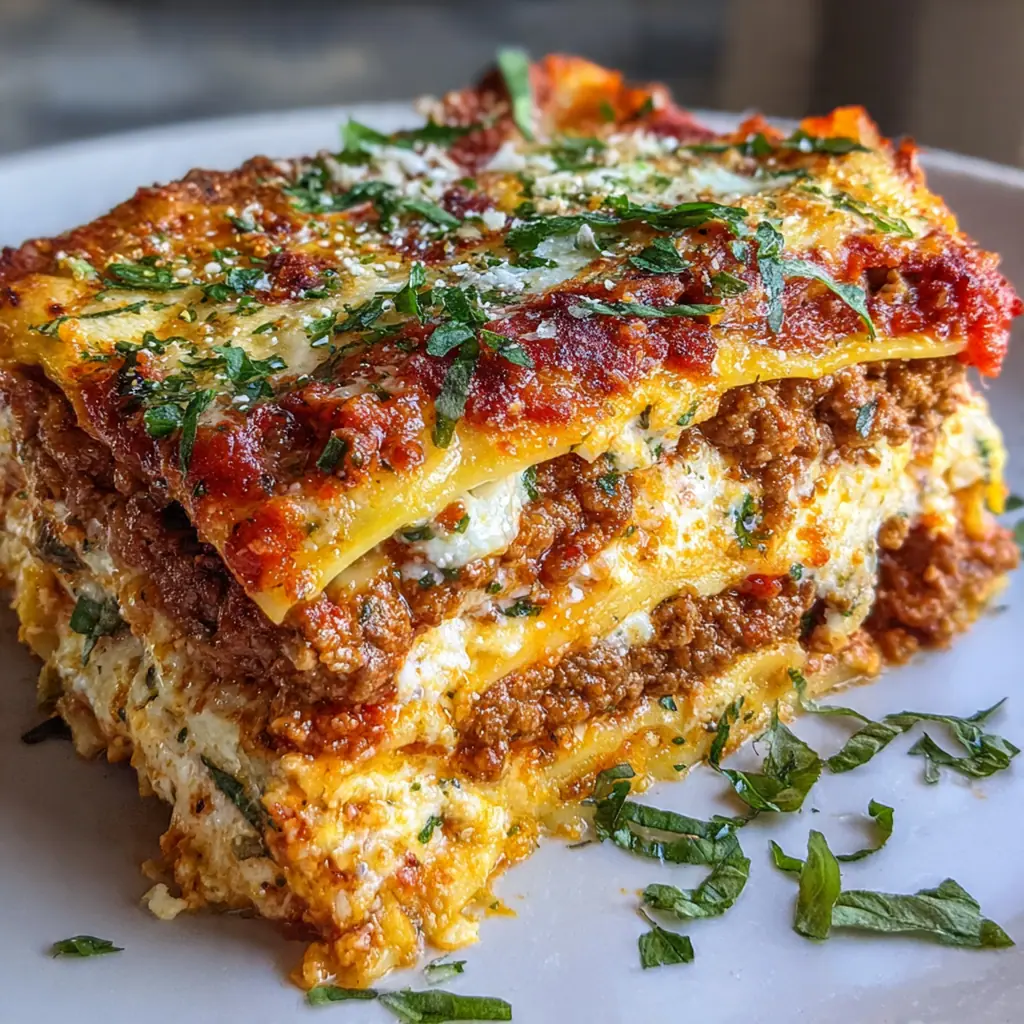
This final step is absolutely crucial for a perfect slice of lasagne. Once you pull the dish from the oven, let it rest on a wire rack for at least 15-20 minutes before you even think about cutting into it. This allows the layers to set and firm up. If you skip this step, the layers will slide apart and you’ll end up with a sloppy pile instead of clean, beautiful squares. The wait is worth it, I promise!
You Must Know
- A slow simmer is the secret to a rich ragù
- The combination of beef and pork is essential
- Béchamel sauce makes it authentically creamy
- Letting the finished lasagne rest is non-negotiable
Storage Tips
Storing your leftover lasagne is simple and it tastes even better the next day. Once it has cooled completely, cover the baking dish tightly with plastic wrap or foil and keep it in the refrigerator for up to four days. For longer storage, you can freeze it. I like to cut it into individual portions, wrap them tightly in plastic wrap and then foil, and freeze for up to three months. To reheat, thaw the lasagne in the refrigerator overnight and then bake it in a 350°F oven until it’s hot and bubbling all the way through.
Ingredient Substitutions
For a truly authentic lasagne alla Bolognese, I strongly recommend sticking to the ingredients as listed, since each one plays a specific role. The combination of beef and pork creates a signature richness that all-beef ragù can’t quite replicate. While you could technically use a different dry red wine, Chianti is classic for a reason. If you must substitute, a Merlot or Cabernet Sauvignon would work. Using pre-shredded cheese will affect the meltiness due to anti-caking agents, so grating your own Parmigiano-Reggiano from a block makes a huge difference in the final texture of your lasagne.
Serving Suggestions
This rich and hearty lasagne is a complete meal on its own, so you don’t need much to go with it. I always serve it with a simple green salad tossed in a bright, zesty vinaigrette. The acidity of the dressing helps cut through the richness of the meat sauce and creamy béchamel, providing a perfect balance. A loaf of crusty Italian bread on the side is also a must-have in my house. It’s perfect for soaking up every last bit of the incredible sauce left on your plate, ensuring nothing goes to waste.
Cultural Context
Lasagne alla Bolognese hails from the Emilia-Romagna region of Italy, specifically its capital, Bologna. This is the authentic Italian version, which might surprise those accustomed to the Italian-American style that often includes ricotta cheese. In Bologna, the dish is defined by two key components: a slow-cooked meat sauce, or ragù, and a creamy béchamel sauce. The ragù is a serious affair, simmered for hours to develop an incredible depth of flavor. The béchamel provides a luxurious, velvety texture that binds the layers together. This version of lasagne is a testament to the Italian philosophy of using simple, high-quality ingredients and patient cooking techniques to create something truly extraordinary.
Pro Tips
- Don’t rush the ragù; the long simmer is everything
- Use freshly grated cheese for the best melt
- Pour the milk slowly when making your béchamel
- Resting the lasagne is the key to clean slices
- This is my go-to recipe for impressing guests
Frequently Asked Questions
For this authentic Lasagne, a dry Italian red wine like Chianti is the perfect choice. It doesn’t need to be expensive! The wine adds a deep, complex acidity that cuts through the richness of the beef and pork. If you don’t have Chianti, a Merlot or Cabernet Sauvignon will also work well to deglaze the pan and build that incredible flavor base for your sauce.
Absolutely! This Lasagne is a perfect make-ahead meal. You can assemble the entire dish, cover it tightly with plastic wrap and foil, and refrigerate it for up to 2 days before baking. Just remember to add an extra 10-15 minutes to the baking time since it will be going into the oven cold. You can also freeze the unbaked lasagne for up to 3 months.
The combination of beef and pork gives the Bolognese sauce for this Lasagne a wonderful depth and richness. However, if you prefer not to use pork, you can simply use all ground beef. For the best results, stick with an 85/15 ground beef to ensure the sauce has enough fat for a tender, flavorful result. You could also try a mix of ground beef and ground veal.
Your Lasagne is ready when the top is beautifully golden brown and the sauce is bubbling gently around the edges of the baking dish. To be certain, you can insert a knife into the center; it should go in easily and come out hot. Let the Lasagne rest for at least 15-20 minutes after taking it out of the oven. This helps it set, making it much easier to slice and serve.
Since this classic Italian Lasagne is so rich and hearty, it’s best to serve it with simple, fresh side dishes. A crisp green salad with a light vinaigrette is a perfect choice to cut through the richness. You could also serve it with some crusty garlic bread for soaking up any extra sauce, or simple steamed or roasted vegetables like green beans or asparagus.