

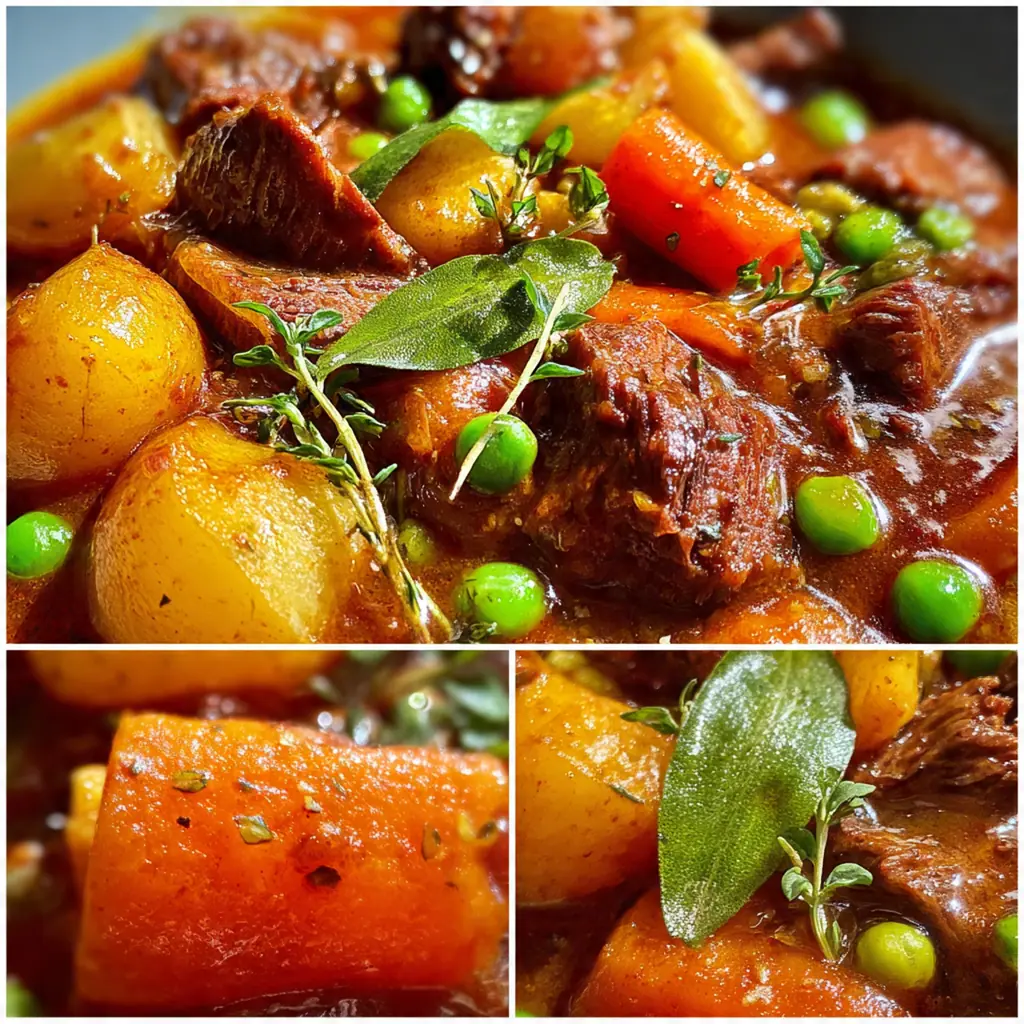
My slow cooker beef stew is the ultimate set-it-and-forget-it comfort food that fills your home with the most incredible aroma all day. It’s a classic American dish that transforms humble ingredients like beef chuck and root vegetables into something deeply rich and satisfying. The long, gentle cooking works magic, breaking down tough meat into fall-apart tender bites and melding all the flavors into a glorious gravy. You’ll love how this recipe rewards a little patience with a meal that feels like a warm hug.
Why You'll Love This Recipe
- The house smells amazing all day as it cooks
- Your hands-on time is minimal, perfect for busy schedules
- The beef becomes so tender it practically melts
- It’s a complete, balanced meal all in one pot
- Leftovers taste even better the next day
Ingredients You’ll Need
- Beef chuck roast: This cut has the perfect marbling of fat that slowly renders down, making the meat incredibly tender and flavorful. Look for well-marbled chunks without too much gristle.
- Kosher salt: Using a coarse salt like this helps season the meat deeply and evenly, drawing out natural flavors. It’s easier to control than fine table salt.
- Freshly ground black pepper: Grinding it fresh right before using gives you a brighter, more aromatic spice that won’t taste dusty. It adds a gentle heat to the stew.
- All-purpose flour: This coats the beef and helps create a beautiful browned crust when searing, which adds flavor and later helps thicken the cooking liquid into a gravy.
- Olive oil: A good olive oil has a high smoke point perfect for searing and adds a subtle fruity note. You’ll use it to brown the meat and soften the aromatics.
- Yellow onion: This variety caramelizes beautifully, adding a foundational sweetness to balance the rich beef. Chop it roughly so it holds up during the long cook.
- Garlic: Mincing it fresh right before cooking releases its pungent, aromatic oils that mellow into a sweet background note. Don’t use pre-minced jars.
- Tomato paste: Cooking it for a minute deepens its flavor, removing any raw acidity and concentrating its umami richness, which forms the base of your stew’s gravy.
- Dry red wine: A full-bodied wine like Cabernet adds a layer of complex fruit and acidity that cuts through the richness. The alcohol cooks off, leaving only flavor.
- Low-sodium beef broth: Using a low-sodium version lets you control the salt level of your finished stew perfectly. A good quality broth makes a real difference.
- Worcestershire sauce: This is your secret flavor weapon, adding a tangy, savory, slightly sweet depth that makes the stew taste like it cooked for days.
- Bay leaves: These woody herbs infuse the entire pot with a subtle, almost floral aroma. Remember to fish them out before serving.
- Fresh thyme: The little sprigs release their earthy, lemony flavor slowly over the hours. Dried works fine, but fresh is more vibrant.
- Carrots: They become sweet and tender, absorbing all the savory juices. Cutting them uniformly ensures they cook evenly.
- Yukon Gold potatoes: Their creamy, buttery texture and thin skin hold up beautifully in the stew without turning to mush. Russets will fall apart.
- Celery: It provides a necessary crisp, clean note and aromatic foundation. Don’t skip it, as it’s part of the classic flavor base.
- Frozen peas: They add a pop of sweet color and freshness right at the end. Using frozen means they’re perfectly blanched and ready to warm through.
- Fresh parsley: A sprinkle of this bright green herb at the end adds a fresh, clean finish that makes the whole dish look and taste lively.
How to Make It
Dry and Season the Beef:
Always start by patting your beef cubes thoroughly dry with paper towels. This is a non-negotiable step because wet meat steams instead of sears. Tossing it with salt, pepper, and flour in a bowl ensures every piece gets an even coating, which is the start of your flavorful crust and future gravy.
Sear the Beef in Batches:
Heat your oil in a hot skillet and add the beef in a single layer without crowding the pan. Crowding creates steam, and you’ll miss out on that crucial browning. Give each piece space and let it develop a deep brown crust on all sides before transferring it to your slow cooker.
Sauté the Aromatics:
In that same skillet, you’ll cook the onions until they’re soft and taking on a little color. This builds another layer of flavor. Then stir in the garlic and tomato paste for just a minute until it’s fragrant – toasting the paste makes it richer and sweeter.
Deglaze with Wine:
This is the best part. Pour your red wine into the hot skillet and use a wooden spoon to scrape up all those delicious browned bits stuck to the bottom. Let it simmer for a couple minutes to cook off the raw alcohol, then pour this liquid gold over the waiting beef.
Combine Everything in the Slow Cooker:
Now just add your broth, Worcestershire, bay leaves, and thyme to the cooker. Give it a gentle stir. Then nestle in your chopped carrots, potatoes, and celery, pushing them down into the liquid so they cook evenly.
Set It and Forget It:
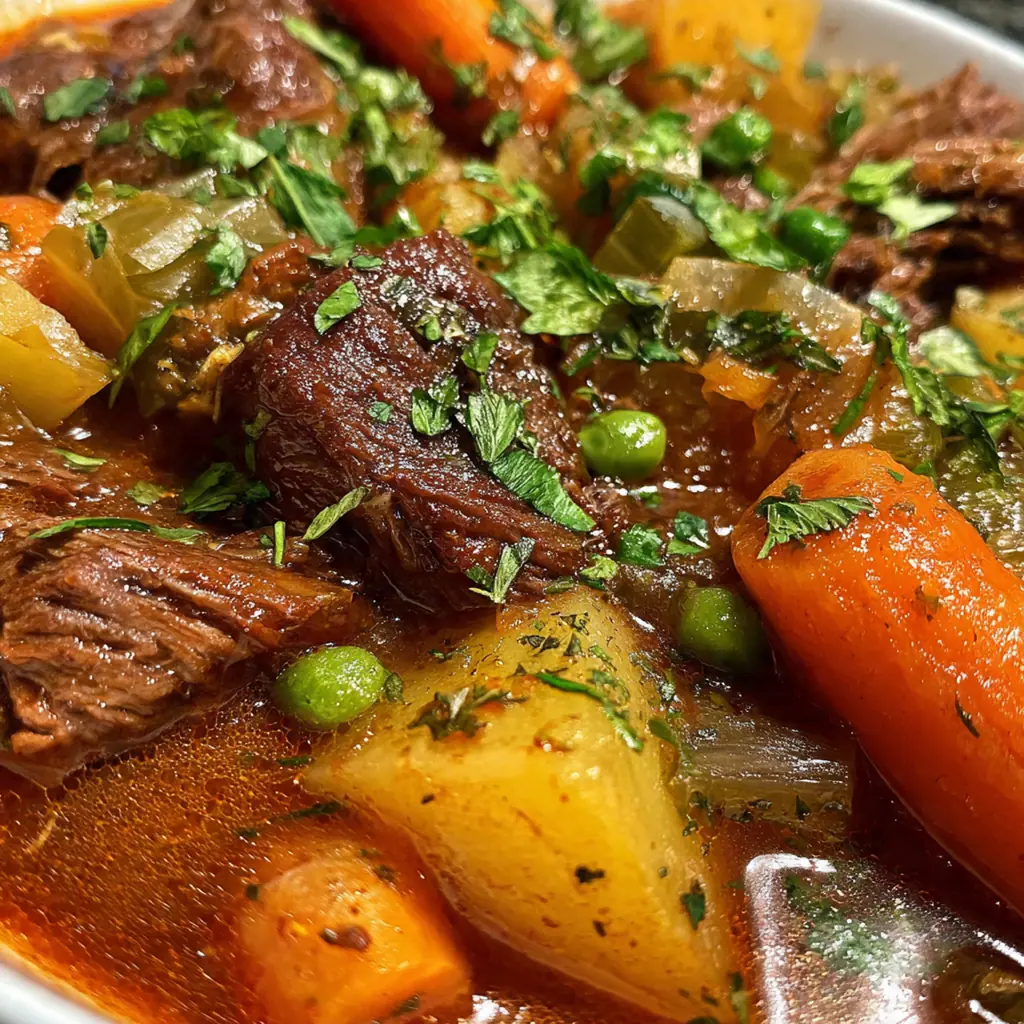
Cover the slow cooker and let time do its work. Cooking on low for eight hours gives the best, most tender results, but the high setting for four to five hours works in a pinch. You’ll know it’s done when a piece of beef falls apart at the touch of a fork.
Finish with Peas and Season:
About fifteen minutes before you’re ready to eat, stir in the frozen peas. They just need to warm through and will lose their vibrant color if cooked too long. Then, pull out the bay leaves and thyme stems, give it a taste, and add more salt or pepper if it needs it.
You Must Know
- Never skip searing the beef for maximum flavor
- Cut vegetables into uniform sizes so they cook evenly
- Let the stew rest for 10-15 minutes before serving
- It thickens up beautifully as it sits
- This is my favorite Sunday supper
Storage Tips
Once your stew has cooled to room temperature, transfer it to airtight containers and stash it in the fridge where it’ll be perfect for up to four days. You can also freeze it flat in freezer bags for easy storage up to three months. To reheat, just thaw it overnight in the fridge and warm it gently on the stove over low heat, adding a small splash of broth or water if the gravy seems too thick. The microwave works in a pinch, but stir it well to avoid hot spots. I often make a double batch just to have these amazing leftovers on hand.
Ingredient Substitutions
If you don’t have red wine, you can just use an extra cup of beef broth, though you’ll miss that lovely depth. Any sturdy potato like red potatoes will work if Yukon Golds aren’t available, just avoid starchy russets as they’ll disintegrate. For a gluten-free version, use a certified gluten-free all-purpose flour blend and double-check your broth and Worcestershire sauce labels. Don’t have fresh thyme? A teaspoon of dried thyme stirred in with the broth is a fine swap. If you’re out of peas, a handful of chopped fresh green beans added in the last hour of cooking adds a nice crunch.
Serving Suggestions
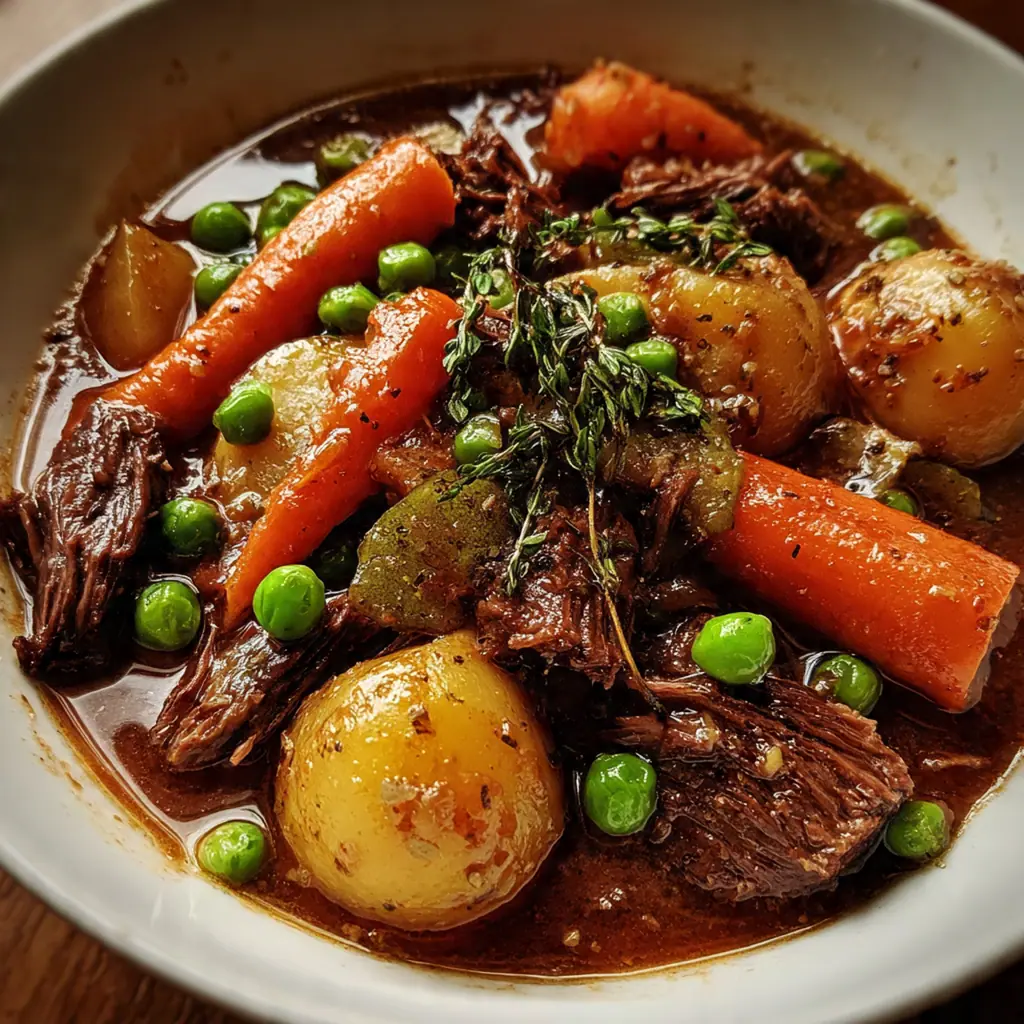
I love ladling this hearty slow cooker beef stew over a big mound of creamy mashed potatoes for the ultimate comfort food plate. Buttery egg noodles or a thick slice of crusty sourdough bread for soaking up every last drop of gravy are also fantastic options. For a lighter touch, serve it in a bowl alongside a simple, crisp green salad with a tangy vinaigrette to cut through the richness. No matter how you serve it, it’s a complete and deeply satisfying meal that never fails to please a crowd.
Cultural Context
This style of slow cooker beef stew is a distinctly American home cooking classic, born from the tradition of one-pot meals that could simmer all day over a fire or on the back of a stove. It’s a direct descendant of dishes like French beef bourguignon and Irish stew, adapted for convenience and the modern kitchen appliance. The beauty of it lies in its simplicity and resourcefulness, turning an economical cut of meat and hardy winter vegetables into something luxurious and deeply nourishing. It’s the kind of meal that has filled farmhouse kitchens and suburban dining rooms for generations, always promising warmth and comfort.
Pro Tips
- For a thicker stew, make a cornstarch slurry at the end
- Use a good quality, drinkable red wine for deglazing
- Let the stew rest before serving for the best texture
- Uniform vegetable cuts are your friend for even cooking
- I always double the recipe for guaranteed leftovers
Frequently Asked Questions
Beef chuck roast is the ideal cut for slow cooker beef stew. It’s well-marbled with fat, which breaks down during the long, slow cooking process, resulting in incredibly tender, flavorful, and fork-tender pieces of meat that won’t dry out.
Absolutely. In fact, this slow cooker beef stew tastes even better the next day as the flavors continue to develop. It stores perfectly in the refrigerator for up to 4 days. You can also freeze it for up to 3 months for a ready-made future meal.
If you prefer not to use red wine, you can simply replace the cup of wine with an additional cup of low-sodium beef broth. The stew will still be rich and delicious, though you’ll miss the subtle depth the wine provides.
The stew is ready when the beef is fall-apart tender and can be easily pierced with a fork. The potatoes and carrots should also be soft. This typically takes 8 hours on the LOW setting after the initial searing and sautéing steps.
This hearty American stew is a complete meal on its own. For serving, a simple crusty bread or flaky biscuits are perfect for soaking up the delicious gravy. A simple green salad or some steamed green beans on the side can add a fresh contrast.