

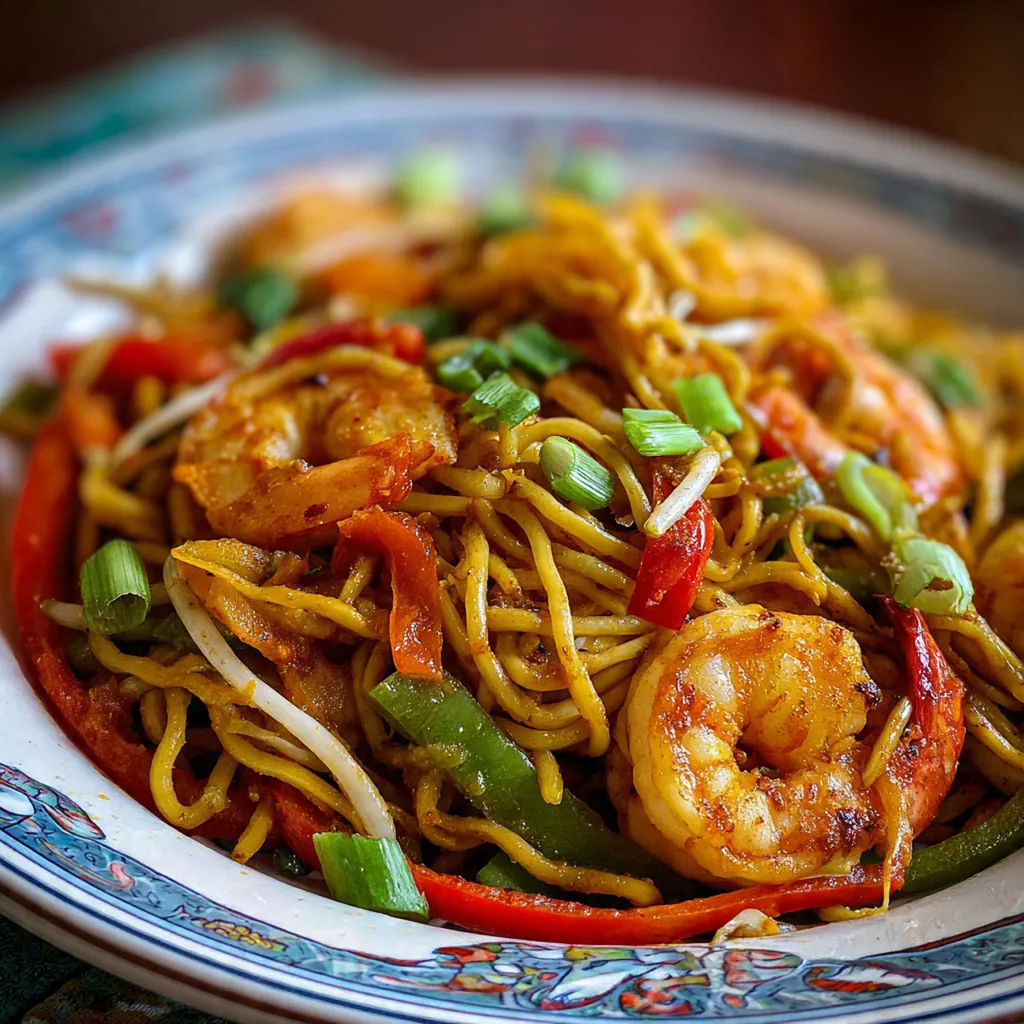
This Shrimp Lo Mein With Red And Green Pepper recipe delivers that crave-worthy takeout experience straight to your table in about half an hour. It’s a classic Chinese-American stir-fry that’s all about the perfect texture—chewy noodles, plump shrimp, and crisp-tender bell peppers coated in a savory, glossy sauce. I’ve made this for countless rushed weeknights because it feels like a treat without the fuss. The key is using a few authentic pantry sauces for that deep, restaurant-quality flavor you’ll keep coming back to.
Why You'll Love This Recipe
- Ready in 30 minutes flat, which beats waiting for delivery
- Authentic sauces create a rich, complex flavor you can’t get from a packet
- You get a complete meal with protein and colorful veggies in one pan
- It’s incredibly forgiving and works with whatever you have in the fridge
- My family asks for this one on repeat and it never disappoints
Ingredients You’ll Need
- Dried lo mein noodles: These wheat noodles have a wonderful chew that holds the sauce so well. Look for them in the Asian aisle, and egg noodles make a fine swap.
- Large shrimp: They cook fast and stay tender. For the best texture, buy them peeled and deveined or do it yourself in minutes.
- Vegetable oil: A neutral oil with a high smoke point is essential for a proper stir-fry. It won’t burn when your wok gets screaming hot.
- Garlic and ginger: Fresh is non-negotiable here for the aromatic base. Mince them fine so their flavor infuses every bite.
- Green onions: The whites add a pungent kick at the start of cooking, while the fresh greens add a pop of color at the end.
- Red and green bell pepper: They add sweet crunch and vibrant color. Slice them thin so they cook quickly and stay a bit crisp.
- Soy sauce: This is your main source of salty, umami depth. Regular or light soy sauce works perfectly.
- Oyster sauce: Don’t skip it—this thick sauce gives the dish its signature savory-sweet richness and that gorgeous glaze.
- Shaoxing wine: A splash of this Chinese cooking wine adds a subtle fermented depth. A dry sherry is the closest substitute.
- Granulated sugar: Just a pinch balances the saltiness and helps the sauce cling to the noodles beautifully.
- Ground white pepper: It provides a gentle, warm heat that’s more aromatic than black pepper.
- Cornstarch: Mixed with water, it creates a slurry that thickens the sauce into a glossy coating.
- Toasted sesame oil: Drizzled in at the very end for its incredible nutty aroma. It’s the finishing touch that makes it sing.
How to Make It
Boil and Prep the Noodles:
Start a large pot of water boiling for your noodles. Cook them according to the package until they’re just tender, then drain and give them a quick rinse under cold water to stop the cooking. Toss them with a tiny bit of sesame oil so they don’t stick together while you prepare everything else.
Mix Your Sauces:
In a small bowl, whisk together the soy sauce, oyster sauce, Shaoxing wine, sugar, and white pepper. This is your flavor powerhouse. In another tiny bowl, stir the cornstarch with water until it’s completely smooth—this slurry will thicken everything later.
Cook the Shrimp:
Get your wok or largest skillet screaming hot over high heat. Add half the oil, then lay the shrimp in a single layer. Cook them for just a minute or two per side until they turn pink and opaque, then scoop them out onto a plate. They’ll finish cooking later, so don’t overcook them now.
Stir-Fry the Aromatics and Veggies:
Add the rest of the oil to the hot wok. Toss in the garlic, ginger, and the white parts of the green onions. Stir-fry for about 30 seconds until you get that incredible smell. Then add your sliced bell peppers and stir-fry for a couple more minutes—you want them bright and just starting to soften.
Build and Thicken the Sauce:
Return the cooked shrimp to the wok. Give your sauce mixture a quick stir and pour it right over everything. Let it come to a lively simmer. Now stir your cornstarch slurry again and drizzle it in while you keep everything moving. In a minute or so, you’ll see the sauce turn glossy and thicken enough to coat the back of a spoon.
Combine Noodles and Finish:
Add your cooked, drained noodles to the wok. Use a pair of tongs to gently toss and lift everything, coating every noodle in that glossy sauce and heating it through for a minute or two. Take the wok off the heat immediately. Drizzle the toasted sesame oil over the top and give it one final, gentle toss to distribute that incredible fragrance.
Garnish and Serve:
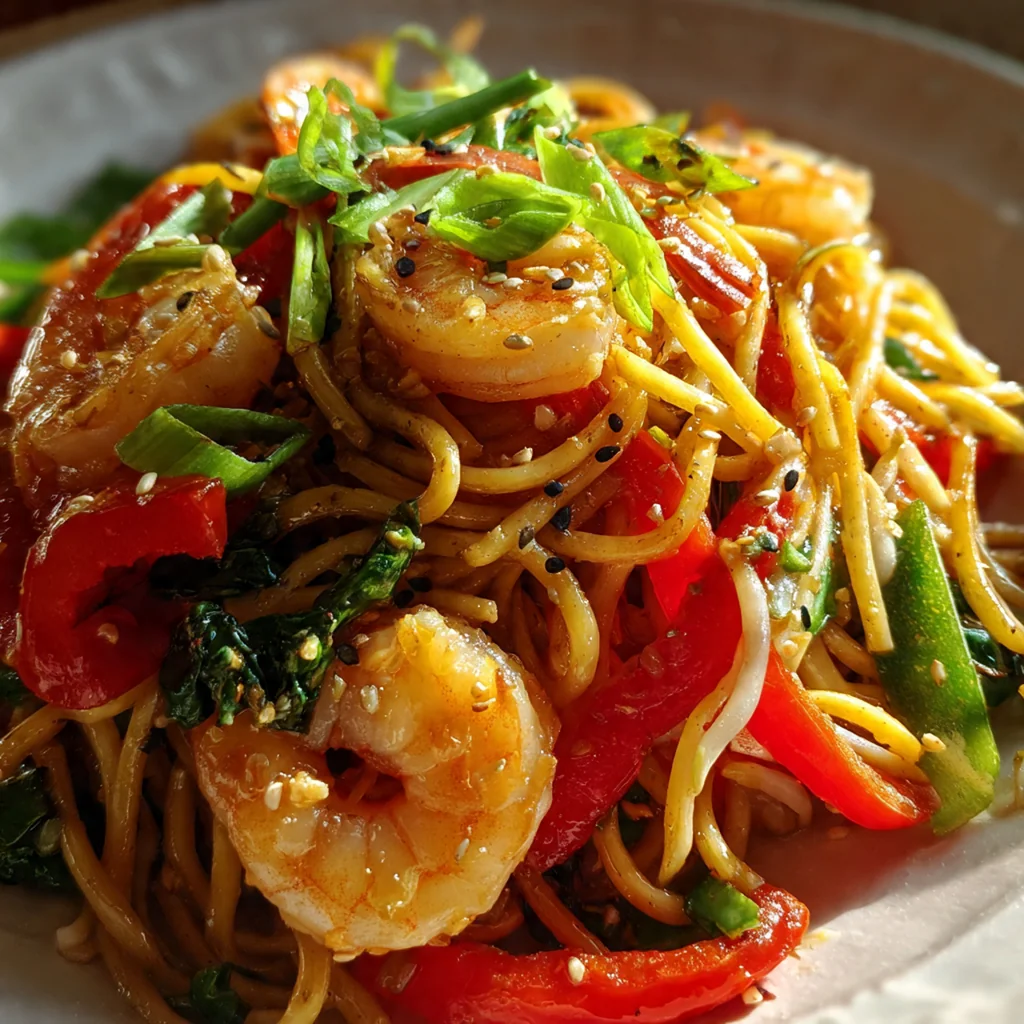
Transfer your Shrimp Lo Mein With Red And Green Pepper to a serving platter or individual bowls. Scatter the sliced green onion greens over the top, and add a sprinkle of toasted sesame seeds or red pepper flakes if you like. This dish is absolutely best served piping hot, right from the wok to the table.
You Must Know
- Have all your ingredients prepped and within arm’s reach before you start
- Cook the shrimp just until pink, then remove them to avoid toughness
- A screaming hot wok is essential for that classic stir-fry char and texture
- Rinsing the noodles stops them from overcooking and becoming mushy
- That final drizzle of sesame oil is the secret aroma booster
Storage Tips
If you have any leftovers, let them cool to room temperature before packing them into an airtight container. They’ll keep in the fridge for up to three days, though the noodles will continue to soften a bit. To reheat, I find a skillet works best—just add a splash of water, cover it, and warm it over medium-low heat, tossing gently until heated through. The microwave will work in a pinch, but it can make the noodles a bit rubbery, so use short bursts and stir between them.
Ingredient Substitutions
No worries if you need to make swaps. For the shrimp, try equal amounts of thinly sliced chicken breast, cubed tofu, or even just extra veggies. If oyster sauce isn’t in your pantry, you can use more soy sauce with an extra pinch of sugar, though the flavor profile will shift. Dry sherry is the perfect stand-in for Shaoxing wine, and you can use any color bell pepper you have on hand. For a gluten-free version, swap the noodles for rice noodles and use tamari instead of soy sauce.
Serving Suggestions
I love serving this Shrimp Lo Mein With Red And Green Pepper with something light and crisp on the side to complement the rich noodles. A bowl of steamed edamame with a sprinkle of sea salt is perfect for nibbling, or some simple vegetable spring rolls for crunch. If you want a fuller meal, start with a small bowl of hot and sour soup or a simple cucumber salad tossed with a little rice vinegar and sesame seeds. It turns a quick dinner into a real occasion.
Cultural Context
While lo mein is a staple of American Chinese takeout, its roots are in Cantonese cuisine, where ‘lo’ means to toss and ‘mein’ means noodles. It’s a preparation method that’s all about the saucy coating, distinct from chow mein where the noodles are often crisped. This version with shrimp and peppers is a classic combination that highlights the stir-fry technique—quick cooking over intense heat to preserve texture and freshness. It’s a beloved dish because it’s hearty, adaptable, and delivers complex flavor with surprisingly simple techniques, making it a true workhorse of the home kitchen.
Pro Tips
- Mise en place is your best friend for any stir-fry
- Pat your shrimp dry before cooking to get a nice sear
- Don’t crowd the wok when cooking the shrimp or they’ll steam
- Add a splash of rice vinegar to the sauce for a bright lift
- I always double the recipe because leftovers reheat so well
Frequently Asked Questions
Dried lo mein noodles or egg noodles are ideal for their chewy texture that holds up to stir-frying. If you can’t find them, linguine or spaghetti make a good substitute—just cook them until al dente so they don’t get mushy when tossed in the hot wok with the sauce and other ingredients.
It’s best served immediately for optimal texture, but you can prep the components ahead. Have the shrimp marinated, vegetables sliced, and sauce mixed. When ready to eat, simply stir-fry everything in a hot wok for a fresh, crisp result. Leftovers can be stored in the fridge for up to 2 days.
Dry sherry is the best direct substitute for Shaoxing wine. If you don’t have either, you can use a tablespoon of rice vinegar or even a dry white wine. For an alcohol-free version, simply use an extra tablespoon of chicken or vegetable broth to deglaze the pan.
Cook the shrimp just until they turn pink and opaque, which usually takes 1-2 minutes per side. They’ll curl into a loose ‘C’ shape. Be careful not to overcook them, as they’ll continue to cook slightly when added back to the hot noodles and sauce at the end.
This dish is a complete meal on its own! For a classic Chinese takeout-style spread, you could pair it with simple sides like steamed edamame, egg rolls, or a light cucumber salad. It doesn’t need rice, as the noodles are the starch component.