

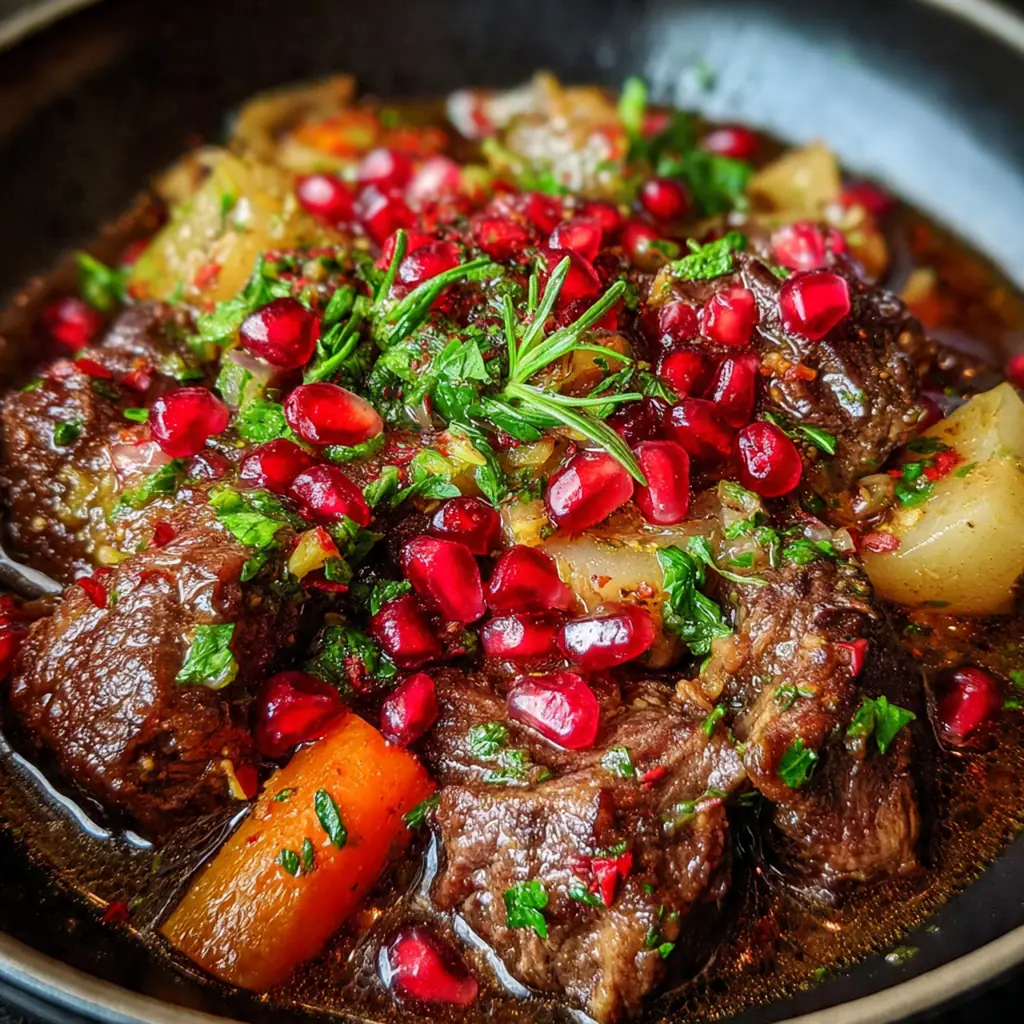
Lamb Braised in Pomegranate, known in Iran as Khoresht-e Fesenjan, is a stunning dish that transforms simple ingredients into a meal full of deep, complex flavor. This Persian stew has been a centerpiece at my family’s holiday table for years, and it’s the one recipe I love pulling out to impress guests. The combination of rich walnuts and tangy pomegranate creates a sweet-and-sour sauce that’s simply magical. It’s a slow-cooked labor of love that yields the most tender, fall-apart lamb you’ll ever taste.
Why You'll Love This Recipe
- The lamb becomes impossibly tender after hours of gentle braising
- The sauce strikes the perfect balance of tangy, sweet, and nutty flavors
- It makes your whole kitchen smell incredible as it cooks
- This is a truly impressive and special dish for any occasion
- I love how the flavors get even better the next day
Ingredients You’ll Need
- Lamb shoulder: Use bone-in or boneless cuts for maximum flavor and succulence, as the fat and connective tissue break down beautifully during the long braise, ensuring your lamb is never dry.
- Kosher salt: Its coarse texture helps you season the meat more evenly, drawing out natural juices and creating a perfect flavor base that permeates every bite of the lamb.
- Black pepper: Freshly ground is essential for its bright, floral heat, which cuts through the richness of the sauce and adds a wonderful aromatic quality.
- Olive oil or ghee: Ghee offers a rich, nutty flavor that’s traditional, while olive oil provides a cleaner taste; both create a fantastic sear on the lamb and cook the onions.
- Yellow onions: Finely chopped and slowly cooked until golden, they form the sweet, savory foundation of the stew and thicken the sauce as they melt down.
- Garlic: Freshly minced garlic adds a crucial aromatic depth that becomes more mellow and sweet as it simmers with the other ingredients in the pot.
- Ground turmeric: This golden spice brings an earthy warmth and vibrant color to the dish, pairing perfectly with the lamb and pomegranate without being overpowering.
- Ground cinnamon: A little cinnamon adds a subtle, sweet warmth that enhances the overall complexity of the sauce and ties all the flavors together.
- Ground nutmeg: Just a pinch elevates the nuttiness of the walnuts and adds an intriguing, aromatic layer that makes the sauce taste more sophisticated.
- Finely ground walnuts: They create the thick, creamy body of the sauce and provide a deep, toasty flavor; grind them fresh for the best texture and oil release.
- Pomegranate juice: Use 100% pure juice without added sugar for the right balance of fruity tartness and natural sweetness that defines the dish.
- Pomegranate molasses: This is the flavor powerhouse, offering an intense, concentrated sweet-and-sour punch that gives the lamb braised in pomegranate its signature tangy glaze.
- Granulated sugar: It’s optional but helpful for adjusting the final flavor; some molasses brands are tarter, so a touch of sugar can round out the sauce perfectly.
- Chicken or beef broth: A low-sodium broth lets you control the seasoning, adding savory depth and liquid for the lamb to braise in until fork-tender.
- Fresh pomegranate arils: These ruby seeds are the perfect fresh garnish, adding a bright, juicy pop and a beautiful visual contrast to the dark, rich stew.
- Fresh parsley or mint: Chopped herbs add a final burst of color and freshness, lightening up the rich dish and making each plate look stunning.
- Cooked basmati rice: The traditional fluffy, slightly nutty rice is the ideal bed for soaking up every last drop of the incredible pomegranate and walnut sauce.
How to Make It
Pat and Season the Lamb:
Start by patting your lamb cubes completely dry with paper towels. This step is crucial because dry meat sears way better than wet meat, giving you those delicious, flavorful brown bits on the bottom of the pot. Season the lamb all over with a good amount of salt and pepper, letting it rest for a moment so the seasoning can adhere.
Sear the Lamb in Batches:
Heat your oil or ghee in a heavy pot over medium-high heat. Don’t crowd the pan—sear the lamb in batches to get a beautiful, deep brown crust on all sides. This isn’t just for color; it builds a ton of flavor for your entire lamb braised in pomegranate sauce. Transfer the browned meat to a plate as you go.
Cook the Onions and Spices:
Lower the heat and add your chopped onions to the same pot. Cook them slowly until they’re soft and turn a lovely golden brown, which takes about ten minutes. Stir in the garlic, turmeric, cinnamon, and nutmeg, and cook just until you can smell their incredible fragrance, about a minute.
Toast the Ground Walnuts:
Add all your finely ground walnuts to the pot with the onions. Stir them constantly for a few minutes to toast them lightly; this wakes up their oils and deepens their flavor, which is the secret to a rich, nutty sauce. You’ll know they’re ready when they smell wonderfully toasted.
Deglaze and Build the Sauce:
Pour in the pomegranate juice, pomegranate molasses, and broth, using your spoon to scrape up all those tasty browned bits from the pot’s bottom. This is where all the flavor comes together. Bring the mixture up to a gentle simmer, letting the liquids combine and mingle.
Braise Until Tender:
Return the seared lamb and any juices on the plate back to the pot. Bring everything back to a very low simmer, then cover the pot and reduce the heat to low. Let it braise gently for about two hours—the slow cooking makes the lamb fork-tender and lets the sauce thicken and darken into that classic deep color.
Adjust Seasoning and Finish:
After about an hour and a half, taste your sauce. This is when you decide if you want to add the optional sugar for a sweeter balance or the rest of the salt. Stir it in well and let the stew finish cooking until the lamb is falling apart and the sauce coats the back of a spoon.
Rest and Thicken:
Once the lamb is perfectly tender, take the pot off the heat and let it sit uncovered for about fifteen minutes. The sauce will continue to thicken as it cools slightly, and the flavors will settle, making your lamb braised in pomegranate even more cohesive and delicious.
Garnish and Serve:
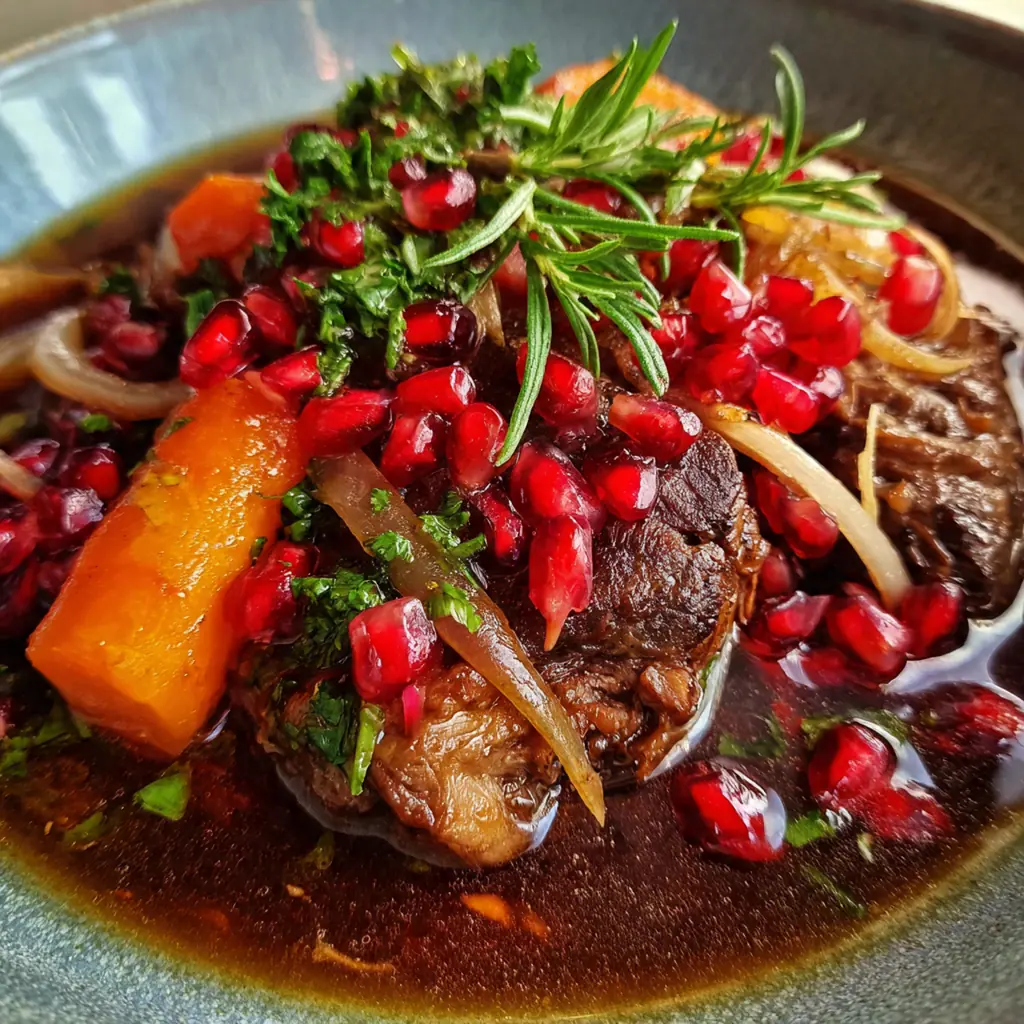
Spoon the warm stew over a generous bed of fluffy basmati rice. Finish each bowl with a handful of fresh pomegranate arils and a sprinkle of chopped herbs for a fresh, colorful, and textural contrast that makes the dish complete.
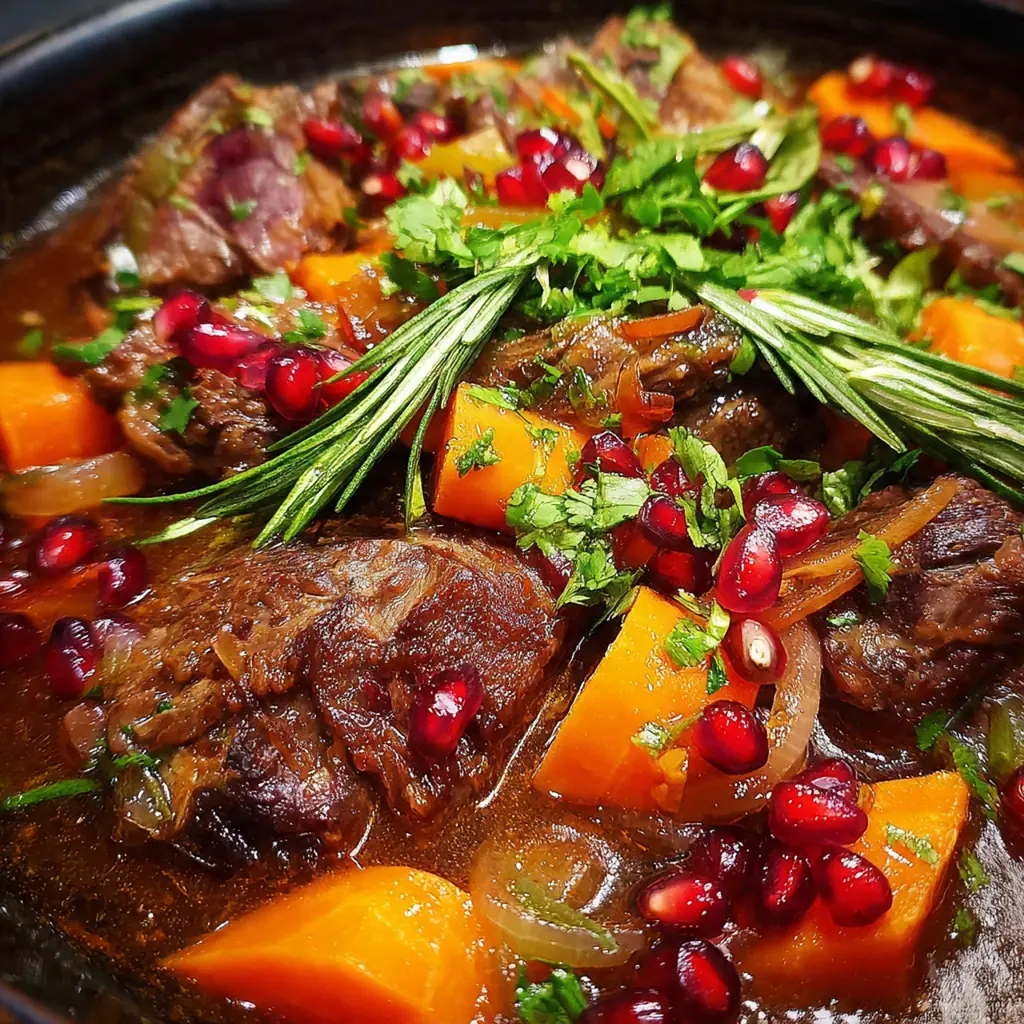
You Must Know
- Do not skip searing the lamb for maximum flavor
- Freshly ground walnuts make a world of difference
- The sauce’s sweet-tart balance is adjustable to your taste
- It tastes even better as leftovers
- I always make a double batch for this reason
Storage Tips
Store any leftover lamb braised in pomegranate in an airtight container in the fridge, where it’ll stay fantastic for up to four days—the flavors actually deepen and improve overnight. For longer storage, you can freeze the cooled stew for up to three months; just thaw it overnight in the refrigerator before reheating. When you’re ready to eat, warm it gently on the stovetop over low heat, adding a tiny splash of water or broth if the sauce seems too thick. Avoid the microwave if you can, as it can make the lamb a bit tough and heat the sauce unevenly.
Ingredient Substitutions
If you can’t find lamb shoulder, beef chuck roast works beautifully with the same method and timing, though the flavor will be slightly different. For the walnuts, you can use pre-ground meal, but toasting it in a dry pan first helps revive its flavor; just don’t use walnut pieces as they won’t create the right sauce texture. If pomegranate molasses is hard to find, you can reduce pure pomegranate juice by simmering it until it’s syrupy and measuring out half a cup, though the flavor won’t be as concentrated. Chicken broth is my go-to, but vegetable broth keeps it pescatarian-friendly, and water in a pinch will work, though the savory depth won’t be as rich.
Serving Suggestions
I always serve this lamb braised in pomegranate over a huge mound of steamed basmati or saffron rice to soak up every drop of sauce, alongside a simple, crisp salad like Shirazi salad with cucumbers, tomatoes, and mint for a fresh contrast. For a more elaborate spread, add some creamy mast-o khiar (yogurt with cucumber), grilled flatbread, and maybe some tangy pickled vegetables to cut through the richness. It’s also incredible with a side of roasted vegetables like carrots or delicata squash, whose natural sweetness mirrors the notes in the stew.
Cultural Context
Khoresht-e Fesenjan is one of Iran’s most celebrated and ancient stews, traditionally served during important celebrations like weddings, Yalda (the winter solstice), and Nowruz (Persian New Year). The dish beautifully represents the Persian culinary philosophy of balancing hot and cold, sweet and sour, with ingredients believed to have medicinal properties. This version with lamb is a classic, though you’ll also find it made with duck, chicken, or even meatballs in different regions. Cooking it slowly for hours is part of the tradition, filling the home with an aroma that promises a truly special meal shared with loved ones.
Pro Tips
- Use a food processor for perfectly ground walnuts
- Taste and adjust the sweet-tart balance halfway through
- For extra flavor, toast the walnuts before grinding
- Let the stew rest off the heat to thicken
- I always make extra rice for the incredible sauce
Frequently Asked Questions
For an authentic flavor, pomegranate molasses is best, but in a pinch, you can reduce 2 cups of pure pomegranate juice by about three-quarters until syrupy, then mix it with a squeeze of lemon for tang. It won’t be identical, but it’ll provide the necessary sweet-sour base for the Lamb Braised in Pomegranate.
Absolutely! Like many braised dishes, Fesenjan’s flavors improve overnight. Let it cool completely, then store it in the fridge for up to 3 days. Reheat it gently on the stovetop, adding a splash of broth if the sauce has thickened too much. This makes it a fantastic make-ahead meal for entertaining.
Lamb shoulder, as listed, is the ideal choice for Lamb Braised in Pomegranate. It has the perfect amount of fat and connective tissue that breaks down during the long cook, becoming incredibly tender and succulent while enriching the sauce.
The lamb should be fork-tender and easily pull apart, which takes about 2 to 2.5 hours of simmering. The sauce will also thicken and darken to a rich, glossy brown, coating the back of a spoon. The oil from the walnuts may rise to the surface slightly, which is normal and adds flavor.
This Persian stew is traditionally served over a generous bed of fluffy basmati rice (like chelo or polo) to soak up the luxurious sauce. A simple side of fresh herbs, mast-o-khiar (yogurt with cucumber), or a crisp salad provides a refreshing contrast to the rich, tangy flavors.