

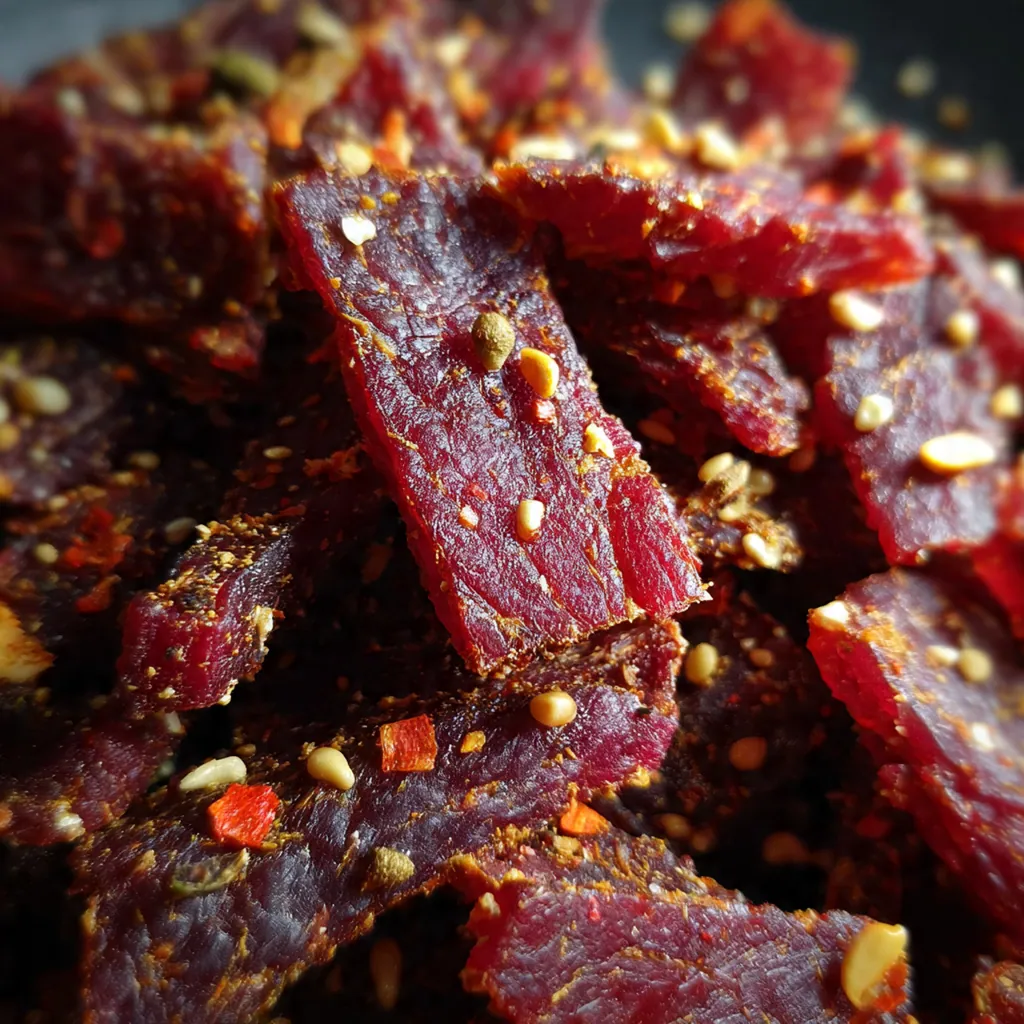
This beef jerky recipe delivers a protein-packed, savory-sweet snack that’s far superior to any store-bought version you’ll find. The secret lies in a simple marinade with smoky undertones and a low-and-slow oven method that anyone can master. As an American classic, homemade jerky is perfect for active lifestyles and a real cost-saver. Once you try this method, you’ll always want a batch on hand for hikes, road trips, or just everyday munching.
Why You'll Love This Recipe
- You’ll save a ton compared to expensive store-bought bags
- Totally customize the sweetness, heat, and smokiness to your taste
- It’s a high-protein, low-carb snack perfect for keto and active folks
- Make a big batch for meal prep during busy weeks
- I’ve been making it for years and it’s always a hit
Ingredients You’ll Need
- Flank steak or top round: These lean cuts have the right texture and minimal fat, which is key for jerky that stores well without spoiling. Trim any visible fat for the best results.
- Low-sodium soy sauce: This provides the essential salty, umami base without overpowering the other flavors, and you control the salt level perfectly.
- Worcestershire sauce: It adds a complex, savory depth with its blend of vinegar, molasses, and spices that rounds out the marinade beautifully.
- Packed brown sugar: This balances the saltiness with a rich molasses sweetness that caramelizes slightly during the drying process.
- Garlic powder and onion powder: These deliver consistent, mellow allium flavors without the risk of burning that fresh garlic or onion could cause.
- Freshly ground black pepper: Fresh grinding gives you the brightest, most aromatic peppery bite that pre-ground just can’t match.
- Liquid smoke: A little goes a long way to impart that classic smoky campfire flavor without needing a smoker.
- Red pepper flakes: These provide a gentle, background heat that builds slowly, and you can adjust the amount to your preference.
- Apple cider vinegar: Its bright acidity tenderizes the meat slightly and helps cut through the richness of the marinade.
- Smoked paprika: This optional ingredient doubles down on the smoky flavor and adds a lovely reddish hue to the finished jerky.
- Honey: If you choose to add it, honey creates a slightly sticky, sweet glaze that makes the jerky extra irresistible.
How to Make It
Partially Freeze and Slice the Beef:
Start by popping your trimmed beef into the freezer for about 30 minutes. This firms it up just enough so you can slice it into super thin, even strips without it sliding around. Use a very sharp knife and slice against the grain for more tender jerky, or with the grain if you prefer a chewier texture. Aim for consistent ¼-inch thick strips so everything dries at the same rate.
Whisk Together the Marinade:
Grab a large mixing bowl and combine the soy sauce, Worcestershire sauce, brown sugar, garlic powder, onion powder, black pepper, liquid smoke, red pepper flakes, and apple cider vinegar. Whisk it vigorously until the brown sugar completely dissolves into the liquid. This creates the perfect savory-sweet and smoky base that will penetrate every fiber of the beef.
Marinate the Beef Strips:
Add all your beef slices to the bowl of marinade and use your hands to toss and massage them, ensuring every piece is thoroughly coated. Cover the bowl tightly and refrigerate for at least 4 hours, though I highly recommend letting it go overnight. That extended time allows the flavors to deeply permeate the meat for the most flavorful jerky.
Preheat Oven and Set Up Racks:
Preheat your oven to 175°F, which is the ideal low temperature for dehydrating without cooking. Line one or two baking sheets with aluminum foil for easy cleanup, then place wire racks on top. Using racks is non-negotiable because it allows hot air to circulate all around the jerky, drying it evenly instead of steaming it.
Drain and Dry the Beef:
Take the marinated beef out of the fridge and remove each strip from the liquid, letting the excess drip back into the bowl. Then, lay the strips on a stack of paper towels and pat them completely dry on all sides. Removing this surface moisture is the trick to getting proper dehydration instead of a steamed texture.
Arrange and Bake:
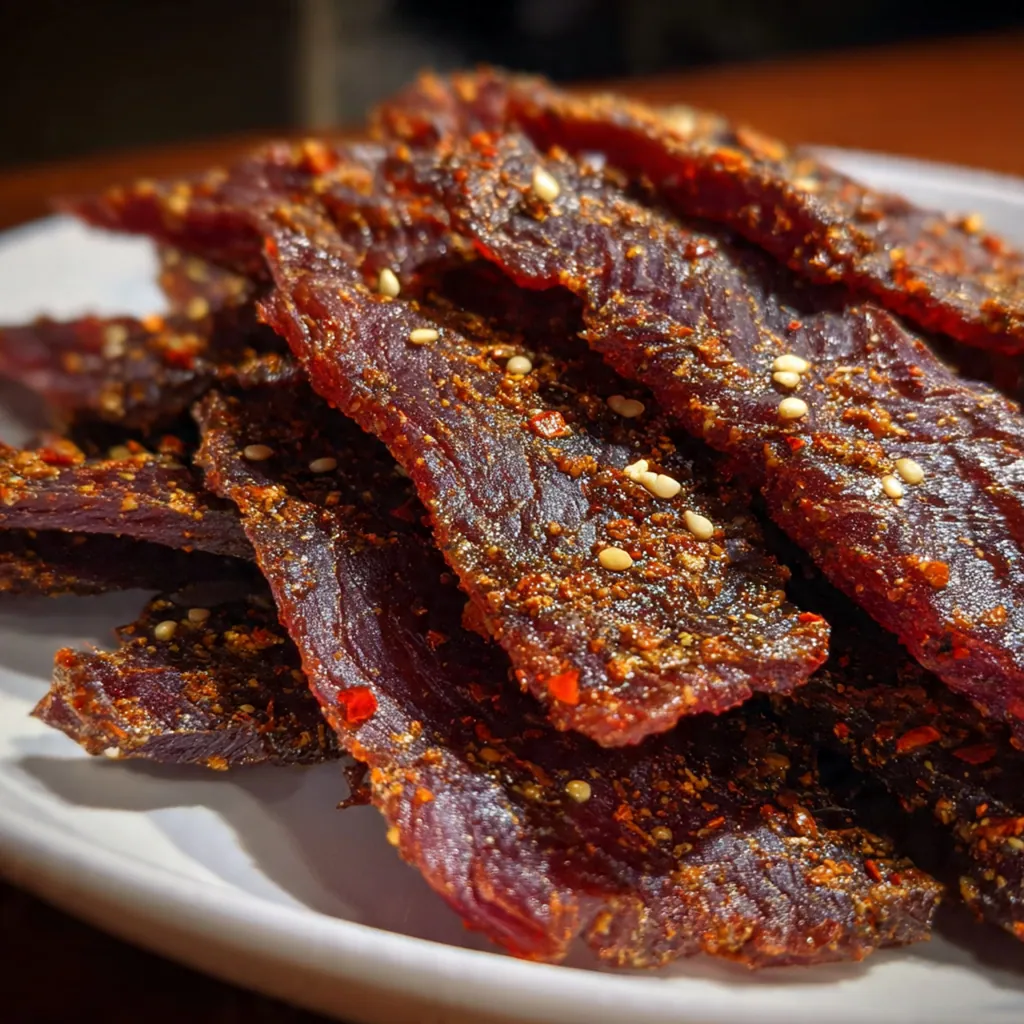
Lay the beef strips in a single layer on your prepared wire racks, making sure they don’t touch or overlap. Slide the sheets into the preheated oven and let the jerky bake for 3 to 4 hours. It’s done when it’s dry and leathery but still bends without snapping cleanly in half.
Check Temperature and Cool:
For absolute food safety, use a meat thermometer to check that the thickest piece has reached 160°F internally. Once done, turn off the oven and let the jerky cool completely right on the racks. It will continue to firm up as it cools, so don’t judge the texture while it’s still warm.
Test and Store:
Once completely cool, bend a piece to test it; it should tear with some resistance. Now it’s ready to enjoy or pack away. Store it properly and it’ll be your go-to snack for weeks.
You Must Know
- Slice against the grain for tender jerky, with the grain for chewy
- Patting the meat dry before baking prevents steaming
- If your oven’s lowest setting is above 175°F, prop the door open a crack
- Cooling completely before storing prevents mold
- This method beats a dehydrator for most home cooks
Storage Tips
Once your jerky is completely cool, transfer it to an airtight container or a heavy-duty ziplock bag. It’ll keep perfectly at room temperature in a cool, dark place for up to two weeks thanks to the salt and sugar in the marinade acting as natural preservatives. For longer storage, tuck it in the fridge where it stays good for a month, or freeze it for up to six months—just separate layers with parchment paper so you can grab a handful without defrosting the whole batch.
Ingredient Substitutions
For a gluten-free version, simply swap the soy sauce for tamari and use a certified gluten-free Worcestershire sauce. If you’re avoiding soy altogether, coconut aminos make a fantastic substitute with a similar salty-sweet profile, though the flavor will be slightly fruitier. Don’t have liquid smoke? A teaspoon of smoked paprika will give you that smoky depth. You can also swap the brown sugar for an equal amount of maple syrup or coconut sugar if that’s what you have on hand.
Serving Suggestions
Obviously it’s perfect straight out of the bag as a snack, but I love getting creative with it. Crumble a few pieces over a green salad for an incredible salty, chewy crunch that beats croutons any day. It’s also fantastic on a charcuterie board alongside sharp cheddar, almonds, and dried apricots, or mixed into trail mix with nuts and dark chocolate chips. And you can’t go wrong with a cold beer and a big handful of jerky after a long hike.
Cultural Context
While drying meat for preservation is a tradition found in cultures worldwide, this particular style of beef jerky with its soy and Worcestershire-based marinade is deeply rooted in American frontier history. Settlers and cowboys relied on salted, dried meat as a vital source of protein on long cattle drives and expeditions where refrigeration didn’t exist. Today, it’s evolved from pure survival food into a beloved snack for outdoor enthusiasts, athletes, and anyone seeking a flavorful, high-protein bite, embodying that do-it-yourself American spirit.
Pro Tips
- Partially freezing the meat is the secret to perfect, thin slices
- Massage the marinade into the beef for the most intense flavor
- Rotate your baking sheets halfway through for even drying
- Let it cool completely on the racks before you even touch it
- I always make a double batch because it disappears so fast
Frequently Asked Questions
For this beef jerky, flank steak or top round are ideal. They’re lean cuts with minimal fat, which is crucial because fat doesn’t dry well and can cause spoilage. Flank steak offers great flavor, while top round is a bit more economical. Just be sure to trim all visible fat for the best shelf life and texture.
Properly dehydrated and stored beef jerky will last 1-2 months in an airtight container at room temperature. For longer storage, keep it in the refrigerator for up to 6 months or freeze it for a year. The key is ensuring it’s completely dry and cooled before sealing it up.
If you don’t have liquid smoke, you can add a smoky flavor using smoked paprika or a pinch of chipotle powder. Alternatively, you can simply omit it—the Worcestershire sauce, soy sauce, and spices still create a deeply savory and delicious homemade beef jerky marinade on their own.
Your beef jerky is ready when it’s dry and leathery but still pliable. It should bend without snapping in half, and you shouldn’t see any moist or shiny spots. The 4-hour cook time is a guide; actual time can vary based on your oven or dehydrator and the thickness of your slices.
This American-style beef jerky is a complete snack on its own! It’s perfect for hiking, road trips, or a protein boost. For a fuller snack board, pair it with cheese, nuts, dried fruit, and crackers. It also makes a great addition to lunchboxes or as a post-workout bite.