

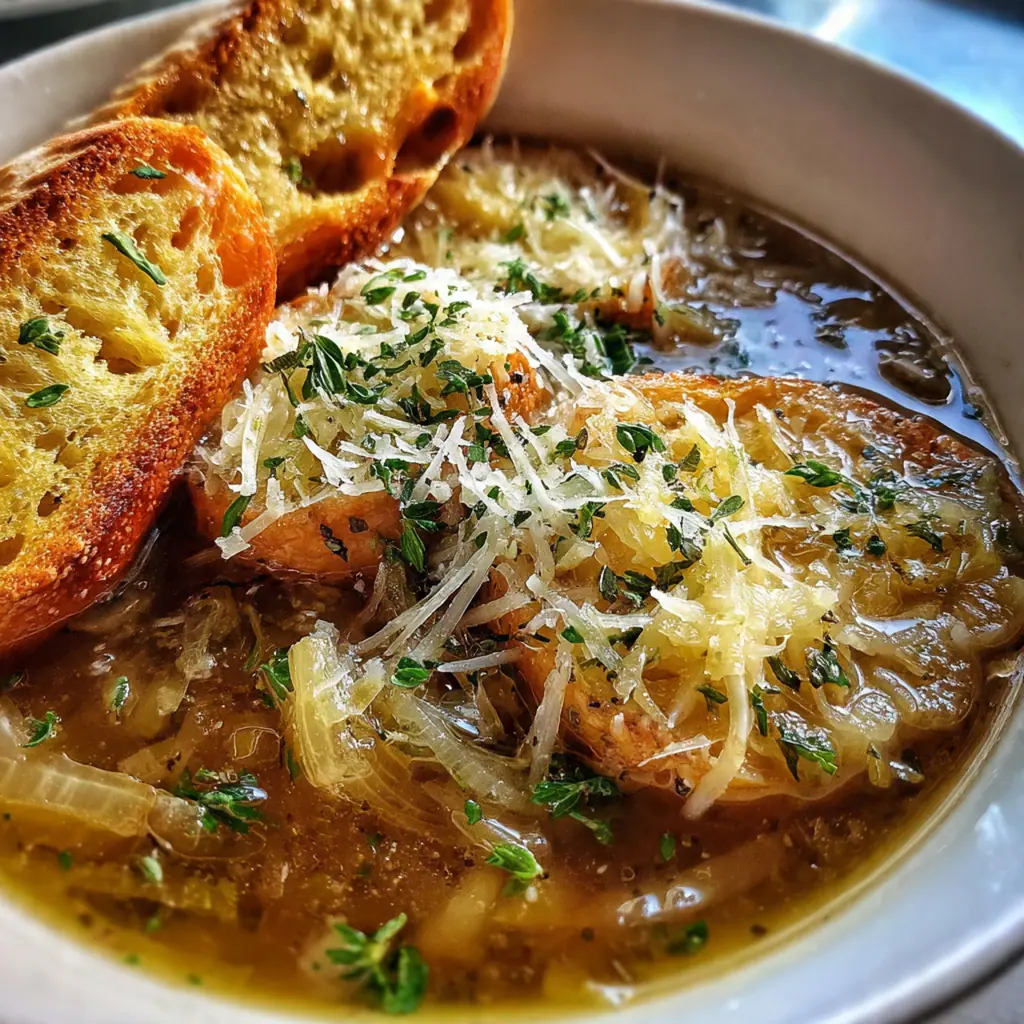
This classic French Onion Soup is the ultimate comfort food, a recipe that transforms simple ingredients into something truly luxurious. Its magic lies in the patient caramelization of onions until they are deeply sweet and jammy, creating the foundation for a rich beef broth. Originating as a humble staple in French bistros, this soup has become a celebrated dish worldwide. Making this authentic French Onion Soup at home brings that cozy, restaurant-quality experience right to your kitchen table, perfect for a chilly evening or an impressive dinner.
Why You'll Love This Recipe
- The flavor is incredibly deep, rich, and savory-sweet
- That bubbly, golden-brown cheese pull is unbeatable
- It is the perfect restaurant-quality dish for guests
- Uses simple ingredients to create a luxurious meal
- This is my go-to recipe for a cozy night in
Ingredients You’ll Need
- Unsalted butter: This allows you to control the salt level perfectly while creating a rich base for sautéing the onions.
- Yellow onions: The heart of the soup. They have a balanced flavor that becomes incredibly sweet and complex when slowly caramelized.
- Kosher salt: It helps draw moisture out of the onions to aid in caramelization and seasons the soup from the very beginning.
- Granulated sugar: Just a little bit helps kickstart the browning process, ensuring your onions develop a deep, golden, jammy character.
- Garlic: Adds a layer of aromatic, savory depth that complements the sweetness of the onions without overpowering them.
- All-purpose flour: This acts as a subtle thickener, giving the broth a slightly more velvety body and beautiful consistency.
- Dry white wine: Used to deglaze the pot, it adds a crucial touch of acidity and complexity that brightens the rich flavors.
- High-quality beef broth: This is the backbone of your French Onion Soup. A rich, flavorful broth will make a world of difference in the final taste.
- Fresh thyme: Imparts a gentle, earthy, and herbaceous note that is classic in French cooking and pairs perfectly with beef and onions.
- Bay leaf: A background player that adds a subtle, savory depth to the simmering broth. You won’t taste it directly, but you’d miss it if it were gone.
- Freshly ground black pepper: Provides a gentle warmth and a touch of spice to balance the richness of the soup.
- Baguette: A sturdy, crusty bread is essential. It soaks up the broth without turning to mush and creates a perfect raft for the cheese.
- Gruyère cheese: The classic choice for its fantastic melting quality and its distinct nutty, slightly sweet, and salty flavor profile.
- Brandy or cognac: This optional ingredient adds another layer of warmth and complexity when used for deglazing the pot.
How to Make It
Begin the Caramelization:
The secret to an exceptional French Onion Soup is patience, and it all starts here. In a large, heavy-bottomed Dutch oven or pot, melt your unsalted butter over medium-low heat. You want the heat to be gentle to prevent scorching. Add all of your thinly sliced onions, the Kosher salt, and the granulated sugar. The salt helps draw out the onions’ moisture, and the sugar gives them a head start on browning. Give everything a good stir to coat the onions in the butter. Now, settle in. This process will take a full 45 to 60 minutes, and you shouldn’t rush it. Stir only occasionally to prevent sticking, allowing the onions to slowly break down and develop that coveted deep, jammy, golden-brown color. This low-and-slow method is what builds the foundational sweetness of the entire soup.
Build the Aromatic Base:
Once your onions have reached that perfect stage of deep caramelization and your kitchen smells incredible, it’s time to add the next layer of flavor. Add the minced garlic to the pot and stir it constantly for about one minute. You’re just looking to cook it until it becomes fragrant. Cooking the garlic for this short time releases its aromatic oils without any risk of it burning, which would introduce a bitter taste to your beautiful soup base.
Thicken with a Roux:
Now you’ll add a touch of flour to create a very light roux. Sprinkle the all-purpose flour directly over the caramelized onions and garlic. Stir continuously to make sure the flour fully coats the onions and absorbs any remaining butter in the pot. You’ll want to cook this mixture for about one more minute. This important step toasts the raw flour, removing any pasty taste and helping to give the finished French Onion Soup a silky, slightly thickened body that feels so luxurious.
Deglaze the Pot:
This is where you capture all the concentrated flavor that has built up on the bottom of your pot. Turn the heat up to medium-high and pour in the dry white wine and the optional brandy, if you’re using it. As the liquid bubbles, use a wooden spoon to scrape up all those flavorful browned bits, known as the fond. These little bits are packed with savory, caramelized notes that will make your soup unbelievably rich. Let the wine bubble and reduce by about half, which should only take about 3 to 5 minutes. This cooks off some of the alcohol and concentrates the wine’s flavor.
Simmer the Soup:
With the pot deglazed, it’s time to turn this flavorful base into a proper soup. Pour in the high-quality beef broth and stir everything together. Add the fresh thyme sprigs and the bay leaf, then season with freshly ground black pepper. Bring the liquid to a gentle boil over medium-high heat. Once it’s bubbling, immediately reduce the heat to low. You want a very gentle simmer, not a rolling boil. Partially cover the pot with a lid and let it simmer for at least 30 minutes. This allows all the individual flavors from the onions, wine, herbs, and broth to meld together into a harmonious, deeply savory soup.
Prepare for the Gratinée:
While the soup is simmering, you can get everything ready for the final, most iconic step. Position an oven rack about 6 inches from the top heating element and preheat your broiler to high. Once the soup has finished simmering, carefully remove and discard the bay leaf and the thyme stems. Give the soup a taste and adjust the seasoning if needed. It might need a little more salt or pepper depending on your broth. This is your last chance to perfect the flavor of the base before it gets its cheesy topping.
Assemble the Soup Crocks:
For safety and ease, place your four oven-safe bowls or crocks onto a sturdy, rimmed baking sheet. This will catch any potential spills and make it much easier to move the hot bowls in and out of the oven. Carefully ladle the hot French Onion Soup evenly into each of the four bowls. Don’t fill them completely to the brim, as you need space for the toppings. Now, top each bowl with one of your toasted baguette slices. It’s perfectly fine if the bread sinks a little into the broth.
Top with Cheese and Broil:
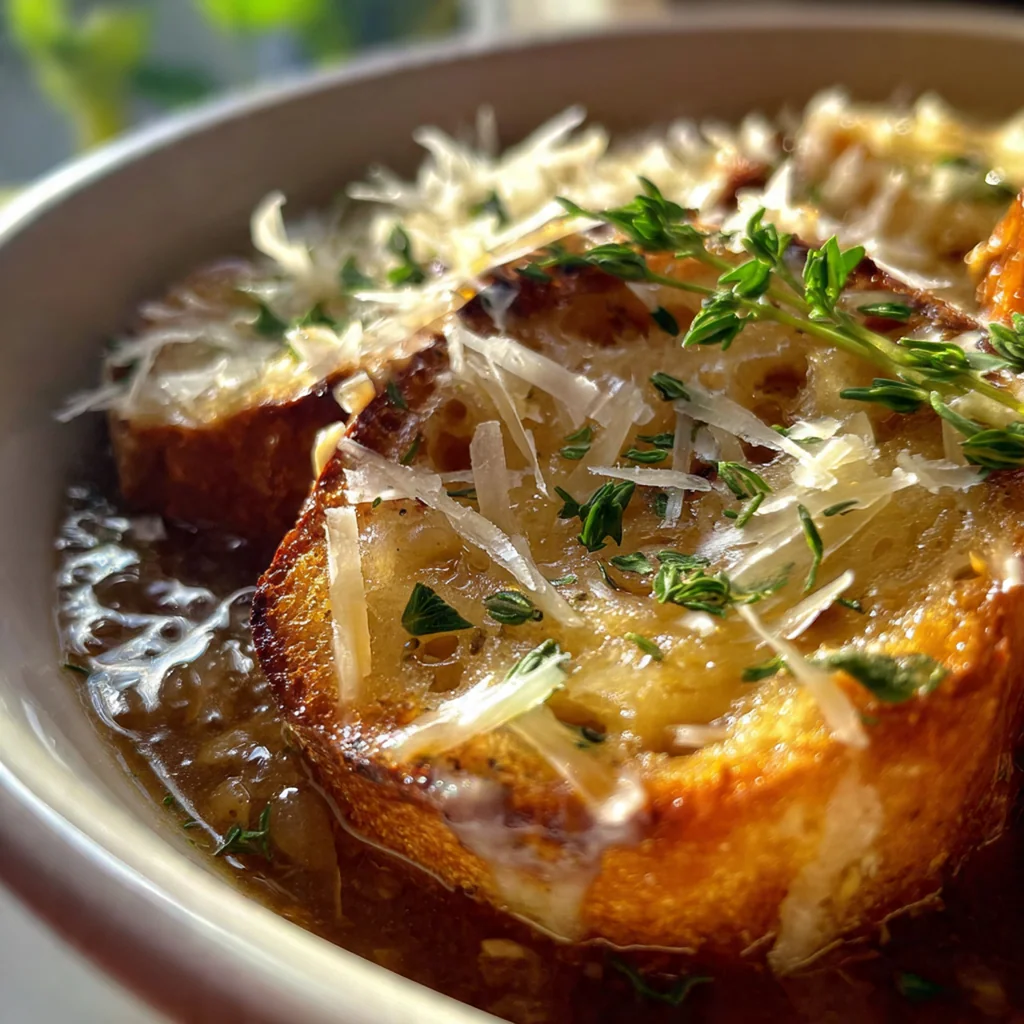
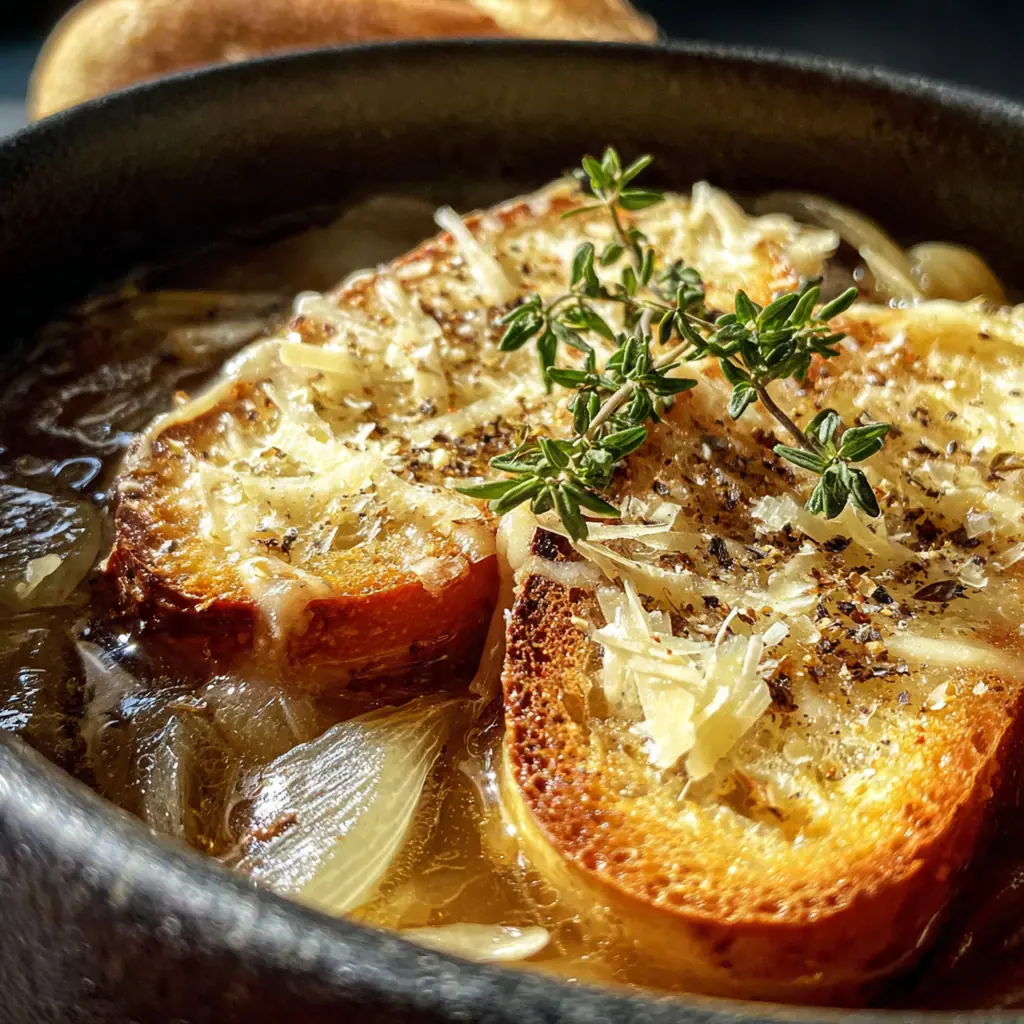
Now for the grand finale. Generously pile the freshly grated Gruyère cheese over each baguette slice. Don’t be shy here. Make sure the cheese covers the bread completely and even spills over the sides of the bowl a bit. This creates those wonderfully crispy, browned cheese edges that are so satisfying to eat. Carefully transfer the baking sheet with the prepared bowls under the preheated broiler. Watch them like a hawk, as this step happens very quickly. Broil for just 2 to 4 minutes, or until the cheese is fully melted, bubbling, and has beautiful golden-brown spots. The soup will be incredibly hot, so let it rest for 5 minutes before carefully serving.
You Must Know
- Patience is key for deeply caramelized onions
- Grating your own cheese ensures the best melt
- A high-quality beef broth makes all the difference
- Don’t skip toasting the baguette until it’s very dry
Storage Tips
The soup base is perfect for making ahead. Once cooled, you can store the soup, without the bread and cheese, in an airtight container in the refrigerator for up to four days. It actually tastes even better the next day as the flavors continue to meld. For longer storage, freeze the soup base for up to three months. When you’re ready to enjoy it, simply thaw it overnight in the fridge and reheat it gently on the stovetop until hot. Then you can ladle it into your oven-safe bowls and proceed with the baguette and cheese topping for a quick and elegant meal.
Ingredient Substitutions
While classic French Onion Soup has a traditional set of ingredients, you have some flexibility. If you can’t find Gruyère, other excellent melting cheeses like Comté, Emmental, or even a mix of provolone and Parmesan can work well. For the onions, yellow are standard, but sweet onions like Vidalia will also work, creating an even sweeter base. If you prefer not to use wine, you can deglaze with a bit more beef broth and a splash of balsamic vinegar for acidity. Just remember that sticking to a high-quality, flavorful beef broth is the one area where you won’t want to compromise.
Serving Suggestions
This French Onion Soup is so rich and hearty that it truly stands as a meal on its own. For a classic French bistro experience, pair it with a simple green salad. A salad with a sharp, tangy vinaigrette is the perfect counterpoint, as its acidity cuts through the richness of the cheese and savory broth, cleansing your palate with each bite. You could also serve some extra crusty bread on the side for dipping into any remaining broth. It keeps the focus on the soup while providing a fresh, crisp contrast that completes the meal beautifully.
Cultural Context
French Onion Soup, or Soupe à l’Oignon Gratinée, has roots as a humble, restorative dish in France, dating back centuries. It gained its modern fame in the 19th-century bistros of Paris, where it became a beloved late-night staple, perfect for warming up party-goers and workers heading home in the early morning hours. Its genius lies in transforming inexpensive, everyday ingredients like onions, stale bread, and beef broth into something elegant and deeply satisfying. This ability to create luxury from simplicity is the very essence of French country cooking, and it’s why this iconic soup remains a celebrated classic in restaurants and homes around the world. It is the ultimate expression of comfort food.
Pro Tips
- Do not rush the onions, low and slow is best
- Grate your own cheese from a block for gooey results
- Toast baguette slices until they are completely dry
- Always use a baking sheet under your bowls for safety
- I find a Dutch oven gives the most even heat
Frequently Asked Questions
A dry white wine is essential for making a classic French Onion Soup. I recommend using a crisp Sauvignon Blanc or Pinot Grigio, as listed in the ingredients. These wines add a bright acidity that cuts through the richness of the beef broth and the sweetness of the caramelized onions. Avoid sweet wines like Riesling or Moscato, as they will make the soup overly sweet.
Absolutely! This French Onion Soup is perfect for making ahead. You can prepare the soup base (without the bread and cheese topping) and store it in an airtight container in the refrigerator for up to 3 days. When you’re ready to serve, simply reheat the soup gently on the stove, ladle it into oven-safe bowls, and proceed with adding the baguette and Gruyère before broiling.
While Gruyère is the traditional choice for French Onion Soup due to its fantastic melting quality and nutty flavor, you have options. A combination of Swiss and Provolone cheese works well. You could also use Comté, Jarlsberg, or even a good quality white cheddar for a different but delicious flavor profile. The key is to use a cheese that melts smoothly and turns golden brown under the broiler.
Patience is key! The onions for your French Onion Soup are ready when they are a deep, rich brown color and have a soft, jam-like consistency. This process takes time, often around 45-60 minutes. They will reduce significantly in volume and smell incredibly sweet. Don’t rush them on high heat, as they will burn instead of caramelizing and create a bitter taste.
Since this French Onion Soup is so rich and satisfying, it’s often served as a main course. A simple, crisp green salad with a vinaigrette dressing makes a perfect accompaniment to balance the richness. If you’re serving it as a starter, it pairs wonderfully with a classic French main course like steak frites or a simple roast chicken.